42- Rydderhall


Nadine and I sprang to our feet and darted away from the window opening. “Blast it, Hook,” I hissed. The riders were approaching quickly and if they hadn’t been headed to the villa already they certainly would be now. One hand on my daggers I started moving toward the kitchen, Nadine followed. I could hear the horses turning in to the little court yard before the back door. Stopping by a hole, I peered through the wall at the two men dismounting on the other side. I grinned when I recognized the burly form of Jemin. “It’s alright!” I cried, as Ayglos and Namal came running from the great hall. “It’s Jemin!”

My brothers heard me, but kept their hands on their weapons as they reached the door and stepped out to meet the arrivals.

Jemin came to meet them with a grin and a bow, “How have you fared, my lords?”

“We are well,” replied Namal, inclining his head in princely acknowledgement, and then turning his gaze to the stranger with Jemin. “Who is your companion?”

“I have brought a doctor.” Jemin gestured, “This is Rawyn Drayk, one of the finest doctors in all of Daiesen.”

Rawyn Drayk stepped forward, saddle bags slung over his shoulder, and bowed. He was old, but wiry and radiating energy. He had close trimmed white hair and beard, and his dark clothes were both well-made and unassuming. “I have been told that there is a wounded creature here who needs my help,” said the doctor.

Namal bowed slightly and moved aside, “Please, come in, and welcome.”

Namal led the doctor inside, and Jemin and Ayglos followed with the horses. Nadine was gliding to meet them even before they were in the entryway. “Doctor,” she stretched out her hand, “Thank you for coming.”

The doctor took her hand and bowed, touching it to his forehead. “My lady,” he replied.

Watching the exchange, it was easy to forget that there was no roof on this place and the walls were blackened and crumbling around us. I wondered how much the doctor had been told about us, and how much he would know once he saw our father.

“Please, follow me.” Nadine turned and the doctor followed her down the hallway toward our cellar.

The rest of us lingered in the entryway. Helping Boitumelo with Remko had been hard enough, I didn’t want to have to help with my own father. My brothers were likely entertaining similar thoughts, because Ayglos said, “Let’s see to the horses, shall we?”

The four of us led the horses to the great hall where Hook and Sinker were already grazing. As we walked, Jemin explained their cover, “We’re expected back in the city before nightfall. I have ridden with the good doctor in escort on a visit to one of the nearby villas—the caretaker is old and much loved by the family; he has been ill and the family wanted him checked on. Rawyn Drayk is one of the best physicians in Dalyn. He is a kind soul who only wants to heal, he will not betray your secrets.”

We tied the horses to the water fountain with enough line to let them graze a little. Hook and Sinker investigated the newcomers and settled into grazing nearby.

“Well,” I said, “I was going to explore the villa.”

“Don’t wander far,” Namal replied. He was already moving off to a spot clear of the horses and taking off his sword belt. “Ayglos and I will be here wrestling for a while yet.”

“Jemin?” I asked, “Would you like to join us?”

Jemin hesitated.

“If you’re worried about me getting into trouble, then you should come along, because I am going to explore.” I was quite experienced with persuading reluctant companions.

The burly man grimaced. “I will accompany you.”

“Excellent.” I turned and headed toward the front of the villa this time. The past two days we’d stayed at the back of the villa, Nadine and I had started at the back and hadn’t gotten far, so I wanted to start someplace new.

Jemin jogged to catch up with me. He was wearing an unremarkable gray cloak, but underneath was a dark blue uniform trimmed in gold. The golden river of Dalyn circled on his shoulder. I remembered back to the tavern in Gillenwater and marveled at how unlike the simple country workman he seemed now.

“So, what news from Dalyn?” I asked as we reached the end of the great hall.

“We all arrived safely back in our various ways,” replied Jemin, giving me a hand over some fallen pillars. “Dalyn is much as we left it. Though…” he paused and I looked at him with raised brows.

“Though?”

“Though the gossip is more thrilling than when we left,” he hopped off the pillars.

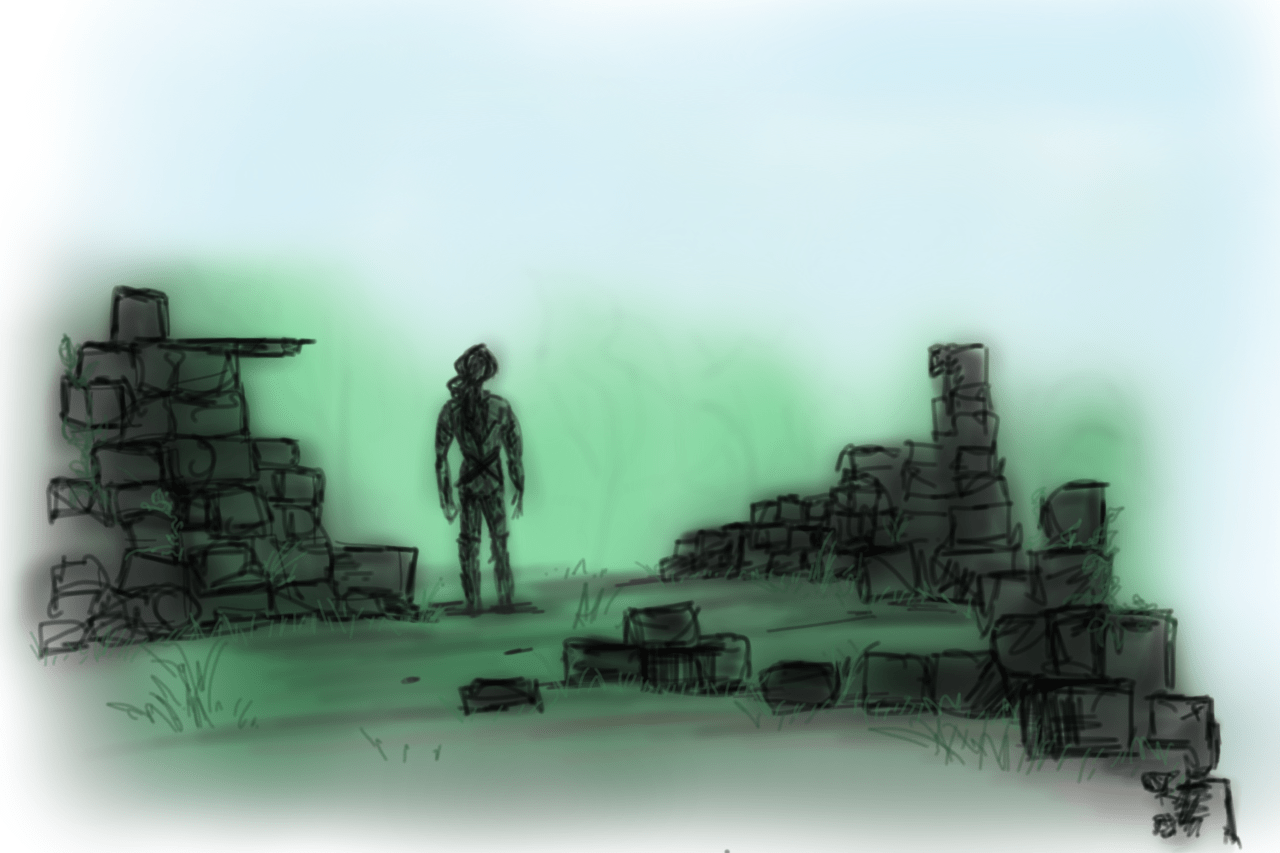
“I would imagine they have a lot to talk about.” I ignored the hallway crossing our path and moved into what must have been a beautiful foyer—the floor was scattered with rubble, but underneath I could see a mosaic depicting fields and trees. The walls had been faced with smooth white stone, though now only pieces remained in place. “I bet they had a skylight in here,” I commented, picking my way forward and gesturing toward the sky.

“Why?” asked Jemin.

“Because I would have,” I replied. There were alcoves off to either side of the foyer. I could see the remains of chairs tucked in them. The front door to the villa was a dark, heavy wood that was bowed and splintering as if it had tangled with a battering ram. It hung half open, its hinges partially ripped from the door posts. Hunting scenes were carved all over both sides of the door. I touched the door gently, tracing my fingertips over the horsemen and stags until they were obliterated by the bludgeoning. I felt as if I were touching the embodiment of loss.

“My lady,” Jemin’s protest came as I slipped through the front door and stepped onto the front stoop. There was even more debris out here. Once, carriages would have been able to pull right up to these stairs, but now the generous courtyard was full of weeds, smashed crockery and furniture…as if the Nether Queen had first had her men break things by hand before burning the place down. Thorough of her.

Jemin squeezed himself out the front door and I turned to greet him, but the words died in my mouth. Across the lintel was carved the word RydderhallThis place must belong to Quill. 


41-Sister Talk

Quill and Jemin left at dawn after showing us where the well was. “You will be safe here for the time being,” said Quill. “The road is that way,” he pointed, “stay away from it.” There was another hedge of happy cypress trees, and who knew how many fields, between us and the road, but we promised to stay away. “One of the men you know will come back in a day or so to bring you supplies—a doctor if I can manage it—and hopefully word about an audience for you with the king.”

They headed back the way we’d come yesterday. I was disappointed that I didn’t get the chance to corner Jemin before they left, but that was forgotten quickly enough. After checking on the horses I went back to bed and slept for several more hours. In fact, most of the family did. For the next two days we barely stirred from the hideaway, even when we were awake. Our most daring act was on the morning of the third day: we built a fire to warm bath water and toast waybread.

Then I convinced Nadine to come explore the villa with me while Ayglos and Namal were sparring in the old great hall. We hadn’t gone far down the destroyed hallway from the kitchen when Nadine pulled me into an alcove and down beside her on an old window seat. “Now,” she commanded, “We are alone. Tell me the whole story—from beginning to end.”

I told her more than I’d told anyone: Starting with the counsel in the leopards’ wagon, the taming of Hook for Quill to ride. Then about finding Quill’s men—and finding out he was their captain–going back to Gillenwater with Jemin and the Tryber showing me the way into the garrison.

“We were already gone,” she put in ruefully.

I told her about the soldiers leading me to the girls, my impulsive intervention, and the ensuing daring escape. Nadine gasped at all the right parts and urged me to keep going when I paused at the homecoming. “We walked for days and days,” I replied, waving my hand. “First to rejoin the men, then to get as far away as we could, then to rescue you. We left the girls with Gabe and Balleck at the house of a friend, they’ll be going to rejoin the circus as soon as they’ve rested.”

“I bet Ayglos and Namal were upset you didn’t leave them any heroics to do in Gillenwater,” laughed Nadine, tossing a look toward the old great hall.

I laughed, “Probably.”

“What about Balleck?” asked my sister.

“What about him?” My cheeks warmed. I didn’t want to talk about Balleck.

“What did he think?” Nadine arched a brow, well aware she’d hit on something.

“He was glad enough to have Olena safe,” I replied.

Nadine studied me, looking for the things I hadn’t said. “What did he think when he found out who you were? Since I assume that secret didn’t last long past that captain recognizing father.”

I bit my lip. “He didn’t know what to think. Especially once we were with Quill’s men and I started doing dangerous things.” I paused, then charged ahead—Nadine would drag it out of me eventually anyway.  “Before we left to stop your caravan he asked me to go with him when they went back to the circus.”

Nadine sat back, her blue eyes widening, “Go with him? Just to be safe, or forever?”

I shifted. Technically he hadn’t said, but, “Both. I think.”

“Oh, Zare, and you said no.”

“I couldn’t say yes; my place is here.” I looked out the window. There had been glass panes once, but the jagged pieces that remained were blackened from the fire. “I can’t leave you, and I can’t leave the fight.”

Nadine grabbed my hand and squeezed it. “Do you think…that ended it? Until those soldiers came I was really expecting him to ask father about courting you before the year was over.”

I thought about the conversation Balleck and I had in the barn. “Oh yes, the possibility of us is gone.” The thought made me sad, but not as sad as I would have expected. I turned to Nadine, realizing with some surprise the fullness of what she’d said, “You expected me to marry a circus performer? So soon?”

“Well,” defended Nadine, spreading her hands, “Galhara burned, we were hiding, our dethroning seemed rather permanent. The circus wasn’t a bad life, you and Ayglos in particular were quite at home there. It didn’t feel so farfetched at the time.”

“Would you go back if you could?” I asked.

“To the circus?” Nadine thought about it. “I don’t know where else we’d go.”

“We could go anywhere.”

“Not really, we’d have to find a way to eat.”

I leaned against the wall and regarded her. “You would probably be married to what’s-his-name now if we hadn’t been besieged.” Even with the fear of the Nether Queen throwing all sorts of strange kinks into the chess game of marriage alliances, Nadine had been engaged. I didn’t think they’d been in love, but he was likeable prince from Charpolia, the city across the bay from Galhara.

Nadine looked out the window. “Yes,” she said slowly, “I probably would.”

“And I would be wading through suitors, complaining to you about the process,” I added.

This brought a smirk to my sister’s face, her eyes flicked back to me for a moment. “As entertaining as that would have been, I don’t mind missing that.”

“If this rebellion succeeds, we’ll be going back to that.”

Nadine turned back to me, “Would you rather have Balleck?” she asked.

I didn’t answer. Instead I turned back to the window and starred out at the overgrown lane and the cypress trees. I had already given up the circus, and I didn’t have a deep desire to go back. But I also wasn’t sure I wanted every aspect of royalty now that I’d tasted life away from it.

Just then two heads bobbed into view on horseback and I heard Hook whinny in greeting.

31-History

When I awoke the room was awash with soft sunlight. I wondered on which end of the day I was waking. I rolled to my feet and looked down at myself. If I had been civilized, I would have shed my dirty clothes before sleeping. I shed them now, and finding a basin and pitcher of water on the little table by the bed, washed up in the chilly water. There was a pair of dark billowy trousers and a pale blue shirt waiting at the end of the bed. The cloth was a good thick cotton and some simple embroidery adorned the waistband of the pants. Nothing too fancy but well-made and worlds above the rags I had been wearing, I pulled them on gratefully. The trousers were slim through the hips and upper leg, then plumed out before coming back to wide cuffs at the ankles. The cut was more typical of summer, but this fabric was definitely suited for winter and I liked the way it fell. My daggers belted on much better over this ensemble and I felt pretty—it was nice. I pulled my sad shoes on and ventured out into the hallway and headed back the way we’d come the night before.

Ironsides’s home was uncomplicated, and I had no difficulty finding the central room with the fireplace. The fire was going and I saw Quill and Ironsides standing by the mantle looking quite serious. I approached and discovered they were arguing.

“It is too soon. The sting of her victory is too fresh,” said Ironsides.

“Shouldn’t that make the people all the more willing to rebel? They still remember what it was like before the Nether Queen!” replied Quill. “Wouldn’t it be better to stop her before she gets even stronger?”

“She is already too strong,” Ironsides countered, frustration in his voice, “Or have you forgotten what happened to Dalyn’s armies?

Quill paused, “I have not forgotten.” Each word stood by itself like candles in the night.

Ironsides softened then. “Then keep doing what you’re doing—be a thorn in her side—be a wound that festers. Be hope.”

Just then Quill noticed me. He turned, “Lady Zare,” and their serious air dropped to the ground like a magician’s cape.

“Good morning,” I said, stepping closer and resting my hands on the back of a big chair. “It is morning, isn’t it?”

“It is, indeed,” Ironsides smiled kindly, “I am surprised to see you up, you are the first.”

“Thank you for the clothes,” I dipped in a little curtsy, lifting the flowy sides of my trousers.

“You’re welcome, they become you,” Ironsides bowed in return and then turned toward the kitchen door, “I will let them know we’ve got one more for breakfast.”

I looked at Quill. He was watching me closely–but with a neutral expression which would make diplomats envious.  “Ironsides doesn’t approve of Dalyn’s rebellion?” I asked, quietly.

Quill’s eyes sparked then, and he shifted, “You heard.”

I nodded. “What do you think?”

Quill met my gaze. His eyes were a deep brown and I was startled how unguarded they were. I felt like our souls were staring at each other. At first it was unsettling, but then I realized that I liked what I saw.

“Do you know how the wars started?” he asked, breaking the spell.

Of course I did, I was royalty. I recited, “Laird Wynn of Shyr Valla declared war on Narya Magnific of Hirhel because of repeated assassination attempts on the life of the crown princess, A’rora Wynn.”

“Do you also know how Shyr Valla fell? Or Dalyn?”

My heart jumped. Would he tell me? “Not really,” I said slowly, “Everything about battle is rumor: Convoluted tales told by spies and peddlers who insist that Shyr Valla is gone without a trace.”

Quill looked into the fire, “Dalyn, as you know, was Shyr Valla’s strongest ally. Due in large part to the engagement between our crown prince, Trinh Kegan, and A’rora Wynn. The day Shyr Valla fell Trinh Kegan was defending her with a large contingent of Dalyn’s army. My father was an officer among them.

“There was a mighty wind on the mountains that day, and then Narya Magnific and her army marched out of the hills and fell upon Dalyn. Dalyn, of course, was not so well defended as she ought to have been—with the bulk of her armies in the mountains. But the city also assumed that she was being attacked instead of Shyr Valla, and that Trinh Kegan would discover this and come to her aid. But days turned to weeks and no rescue came. Our fears grew wild and weakened the cities’ already tottering defenses so Dalyn fell to Narya’s horde. The king was executed, with many of his guard, and his younger son, Tar Kegan, who was only fourteen, was set up as a puppet king in his stead.” Quill paused.

I said nothing. This might have been my story if Galhara had fallen without burning to the ground.

“Later, when things were more settled under Narya’s thumb, our new king secretly sent scouts to Shyr Valla to find out what had happened. Except there was no Shyr Valla to find.” A bitter edge crept into his voice, “The city is gone. Gone as if she had never been. And whatever horror befell her also befell her armies. There were no bones, no bodies, no scorched funeral pyres, no burial mounds. No hint of a great battle of any sort. Just an eerie feeling and grass.”

I stared at him. I had been around overblown rumors so long I wasn’t surprised by the story, and was accustomed to wondering if the rumors were real. I had no doubt that Quill was one of the scouts who’d gone to Shyr Valla, and that he was telling the truth. This forced me from the comfort of uncertainty into a terrifying reality. What devilry simply wiped a city and army out of existence?

Quill tore his gaze from the fire and looked at me again.

I swallowed. “So she is a sorceress.”

He nodded. “But, she has not used magic like that since Shyr Valla. Its rumor goes before her and makes all her other conquests easier. Some cities have surrendered upon receiving her declaration of war. Magic is costly to her, I think, and she uses it shrewdly.”

“Oh, that makes it much easier to cope with,” I said.

“It does,” Quill laughed and I smiled in spite of myself. “My lady, we have hope now. My king desires to throw off her yoke and avenge his kin, and I serve my king. The Nether Queen hasn’t conquered all yet.”

Before I could ask Quill what hope he was referring to, Ironsides came striding back into the room carrying a pitcher and three mugs. I guessed that story-time with Quill was over.

23- Shadow and Spark

Thirteen people, for all their efforts, make much more noise than two people when darting from one shadow to the next. If I had had time to fuss over it, I would have. Jemin had given me directions and I led the way quickly through alleys, pausing at the cross streets to look and listen for patrols. It was hard to be sure, with so many people panting behind me, that the coast was ever clear, but we had to keep going. My senses were on edge, and I strove to keep us close to the river as we wove our way through the dark places. At least the running kept us warm, for our wet clothes were useless in the cold night air.

The large homes and walled gardens gave way to narrower roads crowded by hodge-podge buildings with big windows. There were awnings and porches along the bigger roads to hide us now, so we moved more quickly. The shopping district, I guessed, though all the windows were covered with curtains. Just a little further and we’d cut back west–before the burned out forges and the bridge, since that was doubtless guarded.

Then the drums started.

If anyone in the garrison had still been asleep, they weren’t any longer. Doubtless they had figured out we’d left the garrison; it didn’t matter if they had figured out how. I imagined a fast rider was being sent to the city gates this very moment—if one hadn’t gone already. And the drums told the guards on the city walls that something was afoot.  My heart beat faster and I took the next alley that led west toward the river. It was time to get back to the Tryber anyway. The alley was so narrow that if I tucked my hands into my armpits and spread my arms, my elbows would scrape against the buildings.  Trash littered the ground. I stopped at the end of the alley to watch and listen.  The river glittered in the moonlight ahead of us. Between the drums, the gaggle behind me, and the hammering of my own blood, listening for patrols was almost pointless. I forced myself to wait and watch carefully.

I had almost decided to move on when I noticed three men in helmets walked abreast on the little road by the riverbank, their silhouettes clear against the river. A round lantern bobbed along above the middle soldier as if by some dark magic. They were talking. I glanced behind me and gestured for the women to squeeze against the wall and hide as best they could.  One of the girls tripped, and a broken bit of crockery shattered under her foot.

Everyone froze like rabbits. Olena’s eyes met mine from deep in the alley, she gripped the knife I’d given her. I turned back to watch the patrol, fingering the hilt of Azzad. The soldiers had definitely heard the crockery and were moving toward the buildings. Could I take three by myself in the open? These men were wearing armor, unlike the men in the garrison. I wondered when Jemin would return and if they had those little crossbows which had wounded Quill.

Quill. An idea started. I released my daggers and cast about the alley for a bottle of any sort. Finding half a glass bottle, I turned back to the coming patrol.

Two of the soldiers had drawn their weapons—swords, mercifully—and were moving cautiously ahead of the one carrying the lamp. I guessed they weren’t completely sure where the sound had originated. Or perhaps they were thinking of the fight on the bridge just a few days ago. Now that they were closer I could see the poll and chain that held the lamp aloft—not dark magic after all. That was a relief.

With a deep breath I swaggered into the open, holding my broken bottle and mumbling any words that came to mind about “too much wine” and “go home.”

“Halt!” cried the closest soldier.

I recoiled sloppily, “Oh, no!” and covered my mouth with my free hand.

The three soldiers approached, lowering their weapons. “No one is allowed to be out at this hour.”

“Trying to go home,” I slurred, my head down and the broken bottle dangling in my fingers.

One of the soldiers sheathed his sword, stepped close and took my free arm. “You have to come with us.”

Savagely I twisted my hand free and with my other hand propelled the broken bottle full force into his face. He toppled backwards and the other two looked stunned. I made for the lantern—grabbing the pole with both hands I aimed a kick at the man’s knee and twisted the pole away from him. He collapsed with a cry, grasping at his knee.

The last man leapt at me with his sword. I blocked the sword with the lamp pole–the light doused with a slosh of oil—and then hurtled the butt of the pole into the soldier. He stumbled back, bringing his sword up at my side. I slipped to one side to avoid it and smashed the lantern on his shoulder. The oil splattered harmlessly and the soldier attacked again. I blocked, my eyes on the oil. I threw the pole at him and jumped back to draw my daggers. Deflecting the pole he charged after me. My flint hilts smashed together, scattering sparks and turning the soldier’s oil-soaked shoulder into a sheet of fire. He yelped and stumbled back beating the fire with his hand.

I didn’t get to gloat. The wail of a horn started behind me. I spun and saw the lamp-man, sprawled on the ground, one hand still clutching his knee, the other holding a curling horn to his lips. In two steps I kicked the horn away from him, sending it skittering away on the cobbles. I stood over him glaring. Fear pinched his face as he gazed up at me. “The Nether Queen is not the only women you should fear,” I snarled and clubbed him with Shiharr’s hilt. He dropped to the ground unconscious.

I turned, looking for the man I’d set on fire. I found him face first on the ground, the fire burning out, and Olena standing over him. Her face was deathly pale as I approached. “Are you alright?” I asked.

She dragged her eyes off the soldier and met my gaze. “I killed him.” She gestured to the body and I noticed Jemin’s knife hilt sticking out of the soldier.

“You did what you had do.” I bent and, retrieving Jemin’s knife, cleaned it quickly. “Come on, we need to get going,” I squeezed Olena’s shoulder, hoping that would help ward off the shock of killing.

She nodded, her face was grim, but she met my eyes evenly.

I trotted to the alley and beckoned. My gaggle of stolen women trickled out and followed me across the little open road down to the river’s edge. Along the way I paused to scoop up the pole with the shattered lantern, it wasn’t a buoy but it would do.

21-Of Daring Deeds

I didn’t think. In five steps I was behind the soldier at the door smashing the jar into his head. He crumpled beneath the force as an explosion of water soaked us both. Inside the room his companion and a dozen women gaped at me. The other soldier had Olena by the arm and had been pulling her toward the door.

“Hey!” the soldier released Olena and started toward me.

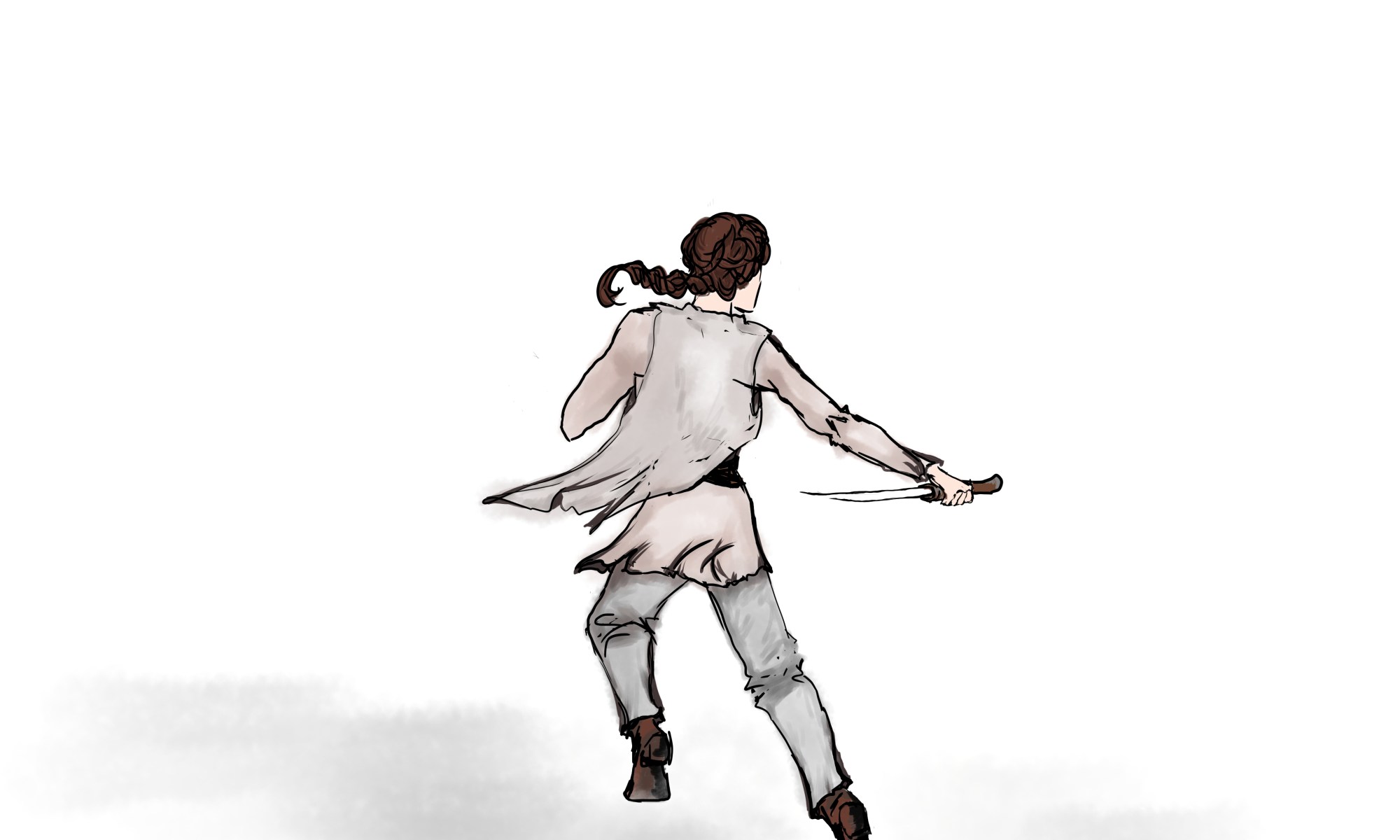
I threw the broken handle of the jar him. He ducked and kept coming, his face filled with murderous intent. It only took a heartbeat to realize just how much trouble I was in—in the middle of an enemy garrison, alone, picking a fight—I couldn’t run and for the first time didn’t have my brothers fighting with me. Oh, Eloi. My only hope was a swift and silent victory. I drew Shiharr and Azzad and leapt into the room.

The soldier cursed in surprise at the sight of my daggers. He drew his sword and swung it at me in a smooth motion. I caught it with crossed daggers to an accompaniment of womanly shrieks.

“Shut up!” I snapped as the soldier attacked again. I jumped out of the way and tried a slash of my own but came nowhere near him. Damn range difference. I would have to be clever to get around his sword. I tried a few more awkward attacks with my daggers—letting the soldier evade easily and willing his confidence to grow so he’d get sloppy. He started advancing, swinging his sword in repeated strikes which I leapt to avoid. When he brought his blade around in a particularly heavy sweep and I dove forward. I barely deflected his blow with Shiharr and thrust Azzad into his inner thigh. He cried out and blood spewed. I pressed my advantage as he stumbled and grasped at the wound. He made a faint attempt to block my advance but I overrode his sword and drove Shiharr into the soldier’s neck. He crumbled and didn’t move again.

I stood over the soldier’s body panting, Shiharr and Azzad dripping blood into the growing pool at my feet. I had forgotten the smell and sight of gore. My first kill alone, my first since the siege.

Olena broke the spell, “Zare!” She ran the few steps to me and gave me a quick hug. “What are you doing here?”

“I have come to rescue you.” Somewhere in the back of my mind I remembered that, in fact, I had come to scout. It was a touch late for that now. I looked around the room, taking in the wide-eyed faces. “Is this everyone from the circus?”

Olena nodded, “And a few more from town. Is Ayglos alright?”

“He is,” I replied, kneeling to clean Shiharr and Azzad in slow deliberate strokes on the soldier’s sleeve. “And he wanted to be here.” As the blades came clean I willed myself to move on and I thanked Remko for his gift. “Where is the rest of my family being held?”

“They are gone. I’m sorry, Zare. I heard the soldiers talk—they left this morning. They are sending them to the Nether Queen.”

I blanched but stuffed my feelings back inside. I had a big enough mess right in this room without thinking about where my family was going. “Get them up. We must be quick, and silent.”

Olena turned back to the women in the room and I turned to the soldiers I had felled. The man in the doorway had to be dragged into the room—as did the broken pieces of pottery. There was nothing I could do about the puddles. I found the room key in the soldier’s hand. He was only unconscious, and I used him as a bridge to get the women out without tracking blood. Now, in the shuddering torchlight of the hallway I recognized most of the women. They were haggard looking, clothes torn and dirty. But my dear circus girls were accustomed to silence and order under stress, they lined the hall waiting for me to take the lead.

Olena was the last out of the room. She closed the door on the soldiers and I locked it. “Where next?” she asked.

Where, indeed, I wondered, pocketing the key. I could take them to the wall, but didn’t know the best way to get there and didn’t know anything about sentry patterns. Pulling Jemin’s knife out of my belt I handed it to her. “The cistern. Bring up the rear.” Then I turned and went back the way I had come, the women trailing quietly in my wake. As an afterthought I sheathed my daggers. Fighting my way out was not my first choice here, even at the head of a line of stolen women. My cheeks heated as I realized I had left my vest with Jemin, and had been openly carrying my blades on my back this entire time. What luck no one had come behind me and seen them. Hopefully that luck would hold till we could get out.

Every hallway we crossed filled me with dread of discovery. The thick quiet of nighttime felt hollow and treacherous. Our every footfall and breath was magnified in my ears till I fancied I could count us without looking back to use my eyes.

We were almost to the cistern when a soldier walked out in front of us. He was looking at his feet and had the air of someone finally done for the day. He looked up, his expression blank at first, then surprised, then irritated. “Where are you going?” he demanded.

“I was ordered to take them to the baths, sir,” the explanation popped out, and I prayed the garrison had baths and they were in this direction.

“Who ordered you, and why didn’t they send guards with you?” he scanned the group with narrowed eyes.

“The captain, sir,” I stammered, “I don’t know, sir.” I glanced over my shoulder at the women. They were hanging their heads, doing an excellent job looking downtrodden. “He said he wanted them cleaned up, sir. That’s all I know, sir.”

The soldiers’ gaze came back to me and lingered, appraising me until I felt very uncomfortable. “You had better have a bath yourself, and wash your clothes. You smell like the river and look like the butcher’s handmaiden.”

I looked down at myself and saw, in horror, that red stained my tunic in several places.

“I’m sure the cook doesn’t need reminders to beat you for clumsiness,” he sneered.

I had no idea what he was talking about. Did he think I’d spilled in the kitchen? A half dozen replies whirled through my head, but I was too taken aback to settle on one. I flinched toward my daggers but the soldier gave a little laugh.

“Don’t lose any of them, and you won’t get a beating,” he said, stepping aside to let us pass.

“Yessir,” I replied and, angling my body to hide my knives as I passed him, started off down the hallway again with my charges in tow. I glanced over my shoulder at him a few times with the pretense of keeping track of the girls. I daren’t turn down the corridor to the cistern with him around. He lingered a few moments watching us, then turned and continued on his way. Not a moment too soon. I found the hallway with the cistern, and shortly after that the stairs down themselves.

My twelve women gathered like a dust on the landing. I waited till they were all arrived and then said, “I will have to take you out one at a time through the water tunnel.”

Doubts scrawled across all their faces.

I continued, trying to exude confidence, “You will need to hide in the water until I get you all out—someone will find your room soon enough and that other soldier saw us headed this general direction.” My audience started to look very nervous. Realism is apparently not encouraging. “Can anyone swim?”

Only two cautiously raised their hands. Well, that was something at least. “You two, grab empty jugs and come with me.” I picked up a water jug and walked down the stairs into the water. The other two swimmers follow suit and I led the way to the tunnel entrance and the screen. I pushed up the screen and propped it open with the jug I had brought. “There are more grates like this, I’ll go in and you pass me the jugs.”

Shortly, the two swimmers and I had all the grates propped open. This would save me a few moments each way, at least. We swam back to the landing, where all the women were still standing. “Olena, get them into the water. I know it’s cold, but it’ll save them from easy discovery.”

Olena nodded and put her hands on the shoulders of the girls nearest her, “Come on, there are stairs, and we can hold onto the masonry.” She coaxed the group to submerge, shivering, into the cistern. Their heads looked like buoys lining the landing as each hung by her finger tips in the cold water.

I was not excited about the next part—it would have been so much easier to boost everyone over the ten-foot wall—if only I’d known how to safely cross the garrison. “Who is willing to go first?”


20-The Cistern


It took two tries and a great deal of straining for Jemin to wrench the grate off the wall. He burst back to the surface gasping for breath. I waited to make sure he was alright. He puffed for a minute and then settled into treading water. “Be careful. Don’t be cocky—just see what you can and get out. It does us no good if they catch you, too. I will gather what I can about sentry movements and I will meet you in that alley over there.” He gestured back toward the alley we’d come down to get here.

I nodded. Thrills of excitement and fear coursed through me as I filled my lungs with air and dove down to the ravaged grate.

Jemin hadn’t ripped the grate off entirely so I had to maneuver to slip through the awkward gap. The tunnel was very dark and I swam with one hand outstretched wishing for a glowfish to light the way. Not that there would be anything to see—there was only blackness and the hollow, muted sound of water pushing through the tunnel. I touched the wall once or twice, it was smooth from the constant caress of the Tryber. The tunnel remained lazy and straight for what seemed like an eternity. Suddenly I realized I should have started counting the moment I entered the tunnel. I could hold my breath at least an hour after the manner of the nymph kind, but I could also drown if this tunnel were somehow longer than that.  It couldn’t be, though, if it stayed straight and the Tryber had told the truth about the cisterns. I swam forward at an even pace trying not to fret.

There was a soft yellow light ahead and I noticed the water no longer filled the tunnel. Then the water became faster, louder and dirtier. The light grew stronger and more yellow until I came to another grate, more delicately made than the first, and filthy. The river water poured through this grate, and then an even finer grate after that. Beyond that I saw a screen. I had arrived at the garrison cistern. Apparently, they tried to filter the Tryber’s grubbiness away before drinking it. I regarded the grate, wondering how long the tunnel had been and if I could get Jemin down here. If I could, how much noise would we make ripping the grates off the wall?

I was not about to let a few sieves prevent me from rescuing my family. I touched the grate—I couldn’t fit my fingers through the holes on this one but I could sort of get a grip on the slimy metal squares. I rattled it cautiously. To my surprise the grate wobbled freely like it was sitting in a track. I tried pushing up and down, and the grate choked, caught, but then slid up and down. They were probably meant to be cleaned, or changed, to keep the water flowing uninhibited into the cistern.

I pushed the grate up and then slipped through underneath. I closed it behind me and tried the next one. It, too, moved on a track—though clearly not very often. I made it past this one and came to the screen at the end of the tunnel. It was smothered in river silt and the water only covered the bottom half. I surfaced and cautiously wiped some of the silt away so I could see into the cistern. Gillenwater had been a very prosperous city once, and the cistern showed that. It was a large room. The stone walls reached high and pillars stood at intervals down the center holding up the stone ceiling. In smaller holdings, a cistern was often just a giant hole. The soft light I’d seen was from a torch ensconced on a landing above the water line. The landing was lined with clay jars and crowned with stairs leading out of the cistern. Seeing no one, I pushed on the screen. It was by far the easiest to move on its track. Ducking underwater again I closed the screen behind me and swam into the cistern.

I approached the landing watchfully. All was quiet, so I drew myself out of the water. I crouched on the landing for a moment, my heart pounding as I listened for movement above. Hearing nothing, I straightened and moved forward to get a look up the stairs. Above, I could see a hallway and another lit torch. The entrance to the cistern was indoors. This information didn’t seem worth the trouble of swimming in unless I found out exactly where this cistern was in relationship to wherever they were holding my family. Resolve quieted my heart. Jemin probably wouldn’t be pleased, but as long as I didn’t get caught we’d be in a much better position.

Stepping back to the edge I squeezed the river water from my clothes as well as I could. There was a solid chance that the garrison had servant girls—and I was willing to bet the girls didn’t have uniforms. I might blend in with my ragged homespun, wet though it was. As an afterthought I picked up one of the jars and scooped water out of the cistern. I could roam the place with purpose.

Taking a deep breath, I muttered, “‘Never been important or the center of attention, ever,’” and then walked up the stairs.

At the top I followed the hallway to the left. Torches flickered at intervals but otherwise everything was quiet. Given the late hour, I didn’t expect many people to be about. Every time I reached a junction I hesitated and peered down the hallway trying to discern what was down there. Mostly living quarters, as best as I could tell. Hall upon hall of bedrooms for fighting men. Once I saw someone walking down the hall toward me—he was looking at the floor and moved tiredly. He entered one of the rooms without so much as a glance in my direction. Getting off patrol duty?

I kept going, moving as quickly as I could while carrying the jug. At the next hallway I heard men’s voices. I paused before reaching the gap and listened. They were moving away from me. I strained to hear them.

“…new girls…yet…red-headed…”

“…fine creature…”

My heart strangled. Olena…they had to be talking about Olena. How many red-headed girls could there be in this garrison? I slipped around the corner with my jug. There were two men far down the hallway, walking away from me still and nearing the end. I started after them, careful to keep my footfalls silent. They were laughing, and it sounded harsh in the quiet of the night.

At the end of the hall they stopped and one of them started fumbling with a locked door. I slowed, but kept coming, mentally chanting “Never been important or the center of attention, ever,” and willing them not to notice a lowly servant on an errand.

They laughed again at some joke I had drowned with my inner chant. I was quite close now. The door opened and one of the soldiers entered the room, the other leaned on the doorjamb, “Pick one for me, too.”

I heard a woman’s yelp, followed a chorus of wails. I had found the circus women.

18-Gillenwater

*

Jemin used our long walk to smear dirt on my face, muss my hair, and teach me to droop my shoulders and shuffle my feet. “Today you are not a princess, and you are not a performer. You are poor, hungry, and have never been important or the center of attention, ever. You probably spend your days bent over mending or maybe cooking,” Jemin continued seriously, “The only thing notable about you is that you’re traveling—and the only one who finds that notable is you.”

I didn’t think I stood out that badly, but I listened and emulated the walk he taught me. I hunched and thrust my neck forward and tried to imagine that I was heavy laden, beaten, and starved.

“We should let people assume that we are married,” instructed Jemin, as if discussing proper saddling. “It may offer you some protection, and is the shortest explanation for why we are traveling together.”

“Very well,” I replied, willing down a blush. This was spy work, and I was not a little girl. I couldn’t afford to be.

The people we met on the road closer in to the city didn’t even look at us, almost as if we were dirt or weeds. Or worse, starving dogs that might beg if they caught our eyes. Even at the city gates, with soldiers scrutinizing all who came and went, we were barely seen. I had thought our pilgrim gaggle was inconspicuous, but I had not known what inconspicuous was.

I tried to take in the city with an expression of shy wonder pasted on my face—as I imagined a country girl might—even though Gillenwater was not a happy sight. The harvest festival was completely ended and the carnival mood had been stripped from the city. The sun shone, but it felt terribly gray and cold inside the city walls. We crossed the little bridge over the Tryber and paused to watch workmen pick through the smoldering remains of the Queen’s forges.

“That should slow her down a touch,” muttered Jemin, before turning away. He guided us toward the market square, where we found the public well and drew water for Line and for ourselves. The glass tree was gone, though the lonely sheaves of wheat still stood here and there around the square. They looked dirty and wilted in the daylight, and without smiling people or music to make them bright.

People went about their business quickly and with their heads down. Even the normal city sounds were muted and strained.

Jemin asked someone where he could find a tavern, and we were directed a block away to a building with a covered porch and long shed row stable down the side. There were a handful of horses tethered to the hitching post out front, and Jemin added Line to the number.

I scratched the donkey behind the ears and whispered, “We can’t attract attention, Line, please be good.” He flicked his ears amiably and I followed Jemin into the dim light of the tavern.

It was midday, and the tavern had a respectable—if small—crowd of people huddled in clusters over bowls of what smelled like lamb stew. There was muted conversation all around the room, and no one really cared when we entered. I found this remarkable as I followed Jemin to the counter and tried to remember if I had ever walked into a tavern without being noticed before. Not that I’d been in a terrific number of taverns—just since the circus, really, and usually with a boisterous group of acrobats.

The middle aged man behind the counter greeted Jemin. “What can I do for you?”

“Some supper, please,” said Jemin, so meekly that I nearly didn’t recognize him. He laid a few coins on the countertop.

The tavern keeper looked at the meager coins then scooped them into his hand. “We can do with that,” he turned and scurried off through a doorway behind the counter.

While we waited, we both looked around. The few people sitting at the counter took mild notice of us. They looked like tradesmen and shopkeepers. A cobbler, I thought, and the one next to him made something out of wood—there was a fine layer of sawdust in his hair and his hands were strong and calloused. Further down, I guessed a blacksmith and probably a couple men and a woman who mostly sold things rather than made them. Our soup arrived in half-full bowls. It was not going to be a generous meal, but it was a change from the meager way fare I’d been eating.

As we ate, Jemin turned to the cobbler. “Excuse me, we’re travelers,” he said, stating the obvious, “And we saw a burned out building as we entered the city, what happened?”

The cobbler swallowed slowly and glanced at the corner before answering. We followed his look to the corner and saw a small table of soldiers, clearly off duty and immersed in their food. “That was the Queen’s forges, someone attacked it day before last.”

Jemin made a shocked face at the explanation, reminding me to look equally stunned. “Who?” asked Jemin, his voice low but carrying a touch of excitement.

The cobbler shrugged. “No one knows. You picked a bad time to be traveling through Gillenwater, I’m afraid. They are searching everywhere to find out who would dare such a thing.”

“It’s caused a powerful lot of trouble here,” put in the wood carver darkly, “We have a curfew now. And any man who is young and fit walks the streets at his own risk.”

Jemin started to act a touch nervous, “What happens to them?”

“Stopped, questioned, sometimes arrested and beaten,” replied the wood carver.

“They have no idea who they are looking for,” added the cobbler, scorn creeping into his voice, “That much is certain.” He looked for a moment as if he were going to say something else but the wood carver jabbed him with his elbow and he held his peace.

“We saw a column of cavalry on the road the other morning, was that because of this?” asked Jemin. He played innocent quite well, I thought.

The tradesmen nodded, and the cobbler replied, “They came back in a rush and bother with prisoners yesterday, so we thought they’d found the fire makers.”

“But the hunt continues,” said the wood carver.

“How odd!” Jemin exclaimed. “Who do you suppose they caught that they’d come back if it wasn’t who they were looking for?”

“Women,” the wood carver grunted in disgust and my stomach turned over.

Jemin glanced at me, “They carry off women?”

The cobbler leaned in, enjoying his possession of insight. “Women, yes. Occasionally. But rumor has it,” he cast a careful eye at the soldiers in the corner, “That they found someone really important—someone of royal blood from one of the other conquered cities—from Galhara.”

14-Captain

*

They hadn’t waited for us. We came around a bend and saw our four companions walking toward us. Namal was in the lead, Gabe hovered near the limping Quill, and Balleck brought up the rear. Ayglos and I urged our horses faster to quickly close the awkward gap between being sighted and giving explanations.

Everyone stopped when we pulled up. Namal put his hands on his hips. “What have you done?” he asked, gesturing to the horses.

“I didn’t steal anything, if that’s what you’re worried about,” I jumped off Hook. “I won a wager at a horse farm.”

Ayglos weighed in, “It’s true, and I don’t think he’s the type to be sore about it.”

“Does that mean your prizes are dysfunctional?” said Namal, eyeing them suspiciously.

“Not anymore,” I said.

“Quite possibly,” said Ayglos.

I glared at him—albeit halfheartedly. He shrugged. Turning back to Namal, I explained, “We needed horses. Quill can’t walk like we have been. I brought Ayglos.” I lifted my chin defiantly. Ayglos: The ultimate seal of legitimacy.

Namal eyed me, and then sighed. “What’s done is done, I guess. I’ll spare you the reminders about everything that could have—and still could—go wrong.” He gestured to the others, “Load them up, then.”

I caught Balleck’s eye and he winked, a proud smile twisting the corners of his mouth. I smiled, too. Leading Hook forward, I might have brushed closer to him than necessary on my way over to Quill. My brothers and Balleck set to loading our packs onto Line and Sinker.

“I assume you can ride?” I stopped next to Quill and Gabe.

Even pale and weary, Quill managed to give me a withering look. “Of course.”

“No one has ridden Hook but me,” I added, “So be gentle.”

Quill arched a brow, “You brought a wild horse to carry your cripple? I feel so cared for.”

“You should, it wasn’t easy.”

Hook snorted.

I patted his neck. “Come say hello, you can’t just get on without formalities.”

Quill grunted, but hobbled a step closer, offering the back of his hand to the black horse. Hook sniffed it and looked away. Quill patted Hook’s neck and the black allowed it. Gabe came next and performed the same ritual, then turned to the task of getting Quill onto the black.

I held Hook and explained what was happening to him while the strongman and the archer tried to find a way to get the archer astride without just heaving him on like a sack of oranges. Though, that is, essentially, what ended up happening. Once everything was situated we set off again down the road. I walked by Hook’s head, just in case he decided to have a nervous breakdown about carrying a rider, and Balleck fell in step beside me.

We were now some of the wealthiest pilgrims in the region, no doubt, thanks to my success. However, we were sufficiently bedraggled that the other travelers we encountered largely ignored us. Nothing of interest happened this part of the journey as there was nothing to do but walk. Every now and then Namal would lead us in a hymn—a nice touch to our cover and oddly encouraging at the same time.

We passed the road which would have led us to Gillenwater and kept on. We took a brief rest for lunch of bread and cheese then continued on our way. In the late afternoon Quill announced, “Let’s stop and rest for a while.”

Only by ‘stop and rest’ he meant dive off the side of the road into the forest and wend our way deeper over rough terrain—where Line the donkey was by far the steadiest on his feet—until we came to a cozy little gully. Quill slid off Hook and hobbled forward, his head thrown back like he was looking for something in the trees.

Then a burly man stepped out of the shadows. “Captain! You’re alive!”

*