23- Shadow and Spark

Thirteen people, for all their efforts, make much more noise than two people when darting from one shadow to the next. If I had had time to fuss over it, I would have. Jemin had given me directions and I led the way quickly through alleys, pausing at the cross streets to look and listen for patrols. It was hard to be sure, with so many people panting behind me, that the coast was ever clear, but we had to keep going. My senses were on edge, and I strove to keep us close to the river as we wove our way through the dark places. At least the running kept us warm, for our wet clothes were useless in the cold night air.

The large homes and walled gardens gave way to narrower roads crowded by hodge-podge buildings with big windows. There were awnings and porches along the bigger roads to hide us now, so we moved more quickly. The shopping district, I guessed, though all the windows were covered with curtains. Just a little further and we’d cut back west–before the burned out forges and the bridge, since that was doubtless guarded.

Then the drums started.

If anyone in the garrison had still been asleep, they weren’t any longer. Doubtless they had figured out we’d left the garrison; it didn’t matter if they had figured out how. I imagined a fast rider was being sent to the city gates this very moment—if one hadn’t gone already. And the drums told the guards on the city walls that something was afoot.  My heart beat faster and I took the next alley that led west toward the river. It was time to get back to the Tryber anyway. The alley was so narrow that if I tucked my hands into my armpits and spread my arms, my elbows would scrape against the buildings.  Trash littered the ground. I stopped at the end of the alley to watch and listen.  The river glittered in the moonlight ahead of us. Between the drums, the gaggle behind me, and the hammering of my own blood, listening for patrols was almost pointless. I forced myself to wait and watch carefully.

I had almost decided to move on when I noticed three men in helmets walked abreast on the little road by the riverbank, their silhouettes clear against the river. A round lantern bobbed along above the middle soldier as if by some dark magic. They were talking. I glanced behind me and gestured for the women to squeeze against the wall and hide as best they could.  One of the girls tripped, and a broken bit of crockery shattered under her foot.

Everyone froze like rabbits. Olena’s eyes met mine from deep in the alley, she gripped the knife I’d given her. I turned back to watch the patrol, fingering the hilt of Azzad. The soldiers had definitely heard the crockery and were moving toward the buildings. Could I take three by myself in the open? These men were wearing armor, unlike the men in the garrison. I wondered when Jemin would return and if they had those little crossbows which had wounded Quill.

Quill. An idea started. I released my daggers and cast about the alley for a bottle of any sort. Finding half a glass bottle, I turned back to the coming patrol.

Two of the soldiers had drawn their weapons—swords, mercifully—and were moving cautiously ahead of the one carrying the lamp. I guessed they weren’t completely sure where the sound had originated. Or perhaps they were thinking of the fight on the bridge just a few days ago. Now that they were closer I could see the poll and chain that held the lamp aloft—not dark magic after all. That was a relief.

With a deep breath I swaggered into the open, holding my broken bottle and mumbling any words that came to mind about “too much wine” and “go home.”

“Halt!” cried the closest soldier.

I recoiled sloppily, “Oh, no!” and covered my mouth with my free hand.

The three soldiers approached, lowering their weapons. “No one is allowed to be out at this hour.”

“Trying to go home,” I slurred, my head down and the broken bottle dangling in my fingers.

One of the soldiers sheathed his sword, stepped close and took my free arm. “You have to come with us.”

Savagely I twisted my hand free and with my other hand propelled the broken bottle full force into his face. He toppled backwards and the other two looked stunned. I made for the lantern—grabbing the pole with both hands I aimed a kick at the man’s knee and twisted the pole away from him. He collapsed with a cry, grasping at his knee.

The last man leapt at me with his sword. I blocked the sword with the lamp pole–the light doused with a slosh of oil—and then hurtled the butt of the pole into the soldier. He stumbled back, bringing his sword up at my side. I slipped to one side to avoid it and smashed the lantern on his shoulder. The oil splattered harmlessly and the soldier attacked again. I blocked, my eyes on the oil. I threw the pole at him and jumped back to draw my daggers. Deflecting the pole he charged after me. My flint hilts smashed together, scattering sparks and turning the soldier’s oil-soaked shoulder into a sheet of fire. He yelped and stumbled back beating the fire with his hand.

I didn’t get to gloat. The wail of a horn started behind me. I spun and saw the lamp-man, sprawled on the ground, one hand still clutching his knee, the other holding a curling horn to his lips. In two steps I kicked the horn away from him, sending it skittering away on the cobbles. I stood over him glaring. Fear pinched his face as he gazed up at me. “The Nether Queen is not the only women you should fear,” I snarled and clubbed him with Shiharr’s hilt. He dropped to the ground unconscious.

I turned, looking for the man I’d set on fire. I found him face first on the ground, the fire burning out, and Olena standing over him. Her face was deathly pale as I approached. “Are you alright?” I asked.

She dragged her eyes off the soldier and met my gaze. “I killed him.” She gestured to the body and I noticed Jemin’s knife hilt sticking out of the soldier.

“You did what you had do.” I bent and, retrieving Jemin’s knife, cleaned it quickly. “Come on, we need to get going,” I squeezed Olena’s shoulder, hoping that would help ward off the shock of killing.

She nodded, her face was grim, but she met my eyes evenly.

I trotted to the alley and beckoned. My gaggle of stolen women trickled out and followed me across the little open road down to the river’s edge. Along the way I paused to scoop up the pole with the shattered lantern, it wasn’t a buoy but it would do.
22-Hold Your Breath

One of the swimmer girls volunteered to go first.  A brown haired girl who looked a year or two younger than me, and who I didn’t recognize from the circus. At the mouth of the tunnel I explained, “A little way into the tunnel we will lose access to air. You must take a deep breath and hold it. Do not panic, do not struggle. Keep your body stiff and straight, and hold onto my collar.” I took her hands and wrapped her fingers around the back of my tunic collar. “I will swim and take you out. Halfway, I will stop and breathe into your mouth—I will pinch your nose when I do it so you don’t suck in water—alright?” I craned my neck to look at her behind me.

The girl nodded, her eyes big.

“What’s your name?” I asked.

“Melia.”

“Ready, Melia?”

Melia nodded again. Her face was pale but resolved.

I turned to face the black hole of the tunnel. “Take a deep breath,” I said, filling my own lungs with the damp air of the cistern before diving forward with my burden.

I swam for speed this time, not caution, hugging the bottom of the tunnel so I didn’t knock my passenger unconscious. And this time I counted. Melia didn’t know I had no idea where “half way” was, and I was determined that next time I would.

When I reached eighty I reached back for her hands and tugged her fingers off my collar. I swiveled in the passage, still gently kicking forward so to make the most of the time, and grasping Melia’s shoulders pulled her up to me. Her hands closed on my arms with deathly strength—she was afraid. I hadn’t done this since we’d fled Galhara; it was exhausting, dangerous, and unpleasant. Even with the girl holding my arms I managed to find her face with my hands, pinch her nose, and putting my mouth over hers blew my air into her. She let go of my arms and as quickly as I could I had her grasp my collar and I poured myself into swimming.

I had reached two-hundred and my burden had gone limp when I saw the pale of the river at the end of the tunnel. Another forty before we reached the surface. I towed Melia by collar to the steep stone bank near the alley where I was to meet Jemin. How were we to get out? I flung one arm up the bank, hooking my hand on the cobbled street and trying to pull myself high enough to see into the shadows of the alley. “Jemin?” I called softly. There was no answer. I shifted. I had to get this girl out of the water, then get water out of her, and I had to do it quickly. “Jemin?” I called again, a little louder. Please be there. “Jemin?”

A figure came out of the alley, crouched low, “Lady Zare?”

“Yes,” relief flooded me, “Give me a hand here.”

“Are you alright?” Jemin came to the bank and tried to take my hand.

“No,” I shook my head, “Get her.”

He noticed the head bobbing beside me for the first time. He looked surprised, but he reached down into the river, snagged his hands under the girl’s armpits and pulled her out of the river. I helped guide her body over the edge. Then I used both my hands to haul myself up after her. The cold night air hit me as a harsh reminder that this was autumn.

Jemin laid Melia on the cobblestone in the alley and I was glad when he set about the business of forcing the water out of her lungs so I didn’t have to. I leaned against a building and caught my breath as the girl hacked up water and coughed. She startled when she saw Jemin but he soothed her and helped her sit up. She wrapped her arms around herself and shivered. He put my vest around her shoulders.

Jemin turned to me. “Are you alright? What happened?”

“I found the kidnapped girls. I killed a man. They are all in the cistern now waiting for me to get them out.”

Jemin stared at me.

“And my family has already been moved,” I added, wiping water off my face.

Jemin stared a moment longer then exclaimed, “I thought I told you not to get cocky!”

“If it makes you feel better it was an accident. And I’m sure not feeling cocky, I have to bring eleven more women the same way I brought her,” I pointed at the girl huddled by Jemin.

“Will they all arrive full of water?” he asked in annoyance.

“Hopefully not,” I huffed. Now that I had a count, I could space the breath better. “I have to go back. Maybe you can start thinking of a way to get out of the city.  It takes roughly four minutes to swim the tunnel one way, so, don’t expect me back before eight have passed.”

Jemin shook his head, “Be safe,” he said, resigned. I turned and went back to the river.

The Tryber received me warmly and the trip back to the cistern seemed to take much less time than the trip out had. I was greeted at the other end by eleven pale, frightened faces in a dark cistern. If any servant girl did happen to see them, she would probably scream in terror at seeing the cistern haunted by such ghosts. I took the closest girl by the hand and explained the journey as I had to Melia. She was one of the acrobats and significantly easier to pull through the water, accustomed as she was to making herself stiff as a board for minutes at a time. Fit and aided by a better timed breath, she made it to the free air on the open river without ingesting water. I stayed in the water as she climbed out into Jemin’s care. Then I dove down again. Ten more to go. I felt the currents helping me along as I enacted the grueling evacuation. With each trip I could feel my limbs getting heavier and my head getting slower. Swimming took more and more effort, even with the Tryber’s kindly efforts. I tried to remember the last time I’d swum as long as this and couldn’t. Probably because I had enough to do counting and swimming. By the time Olena, the last to come, and I broke the surface in the river I felt that what I wanted most in the whole world was a warm bed. Right this instant, in fact.

Olena climbed out with but little assistance from Jemin. My arms shook as I pulled myself up and Jemin quickly reached a hand to steady me and help me to the alley.

“I should go back,” I mumbled wearily to Jemin, “and close the grates behind me. I had to prop them open to get everyone out.”

“Grates? Forget them, you’re not going back. The last twenty minutes there has been a commotion in the garrison, I expect soldiers in the streets at any moment.”

“I bet they found the blood.”

“I’m sure they did,” growled Jemin. He pulled me deeper in the alley, past the women huddled together in the darkest shadows, and stopped next to a small pile of crates. Probably the waste from the fine kitchen of the fine house we were hiding behind.

I sat down on the crates and tried to wring out my clothes, shivering in the night air. The moon highlighted the dark splotches on my tunic and I shuddered. Bunching my sleeves up I grabbed the cloth and twisted it savagely, wishing I could get all the blood out of them as I drove the water out.

“Are you hurt? Are those…” Jemin hesitated and I looked up at him.

“What?”

“Stripes?” he pointed awkwardly to my forearms.

“Oh,” I had forgotten about those. Visible now after so much time in water, two blue stripes graced each arm, stretching from under my sleeves and trailing halfway down my forearms. “Yes, nymphs have blue stripes…camouflage in water. Mine are much more pale, and not quite so far reaching. They fade when we aren’t in water.” I pulled my sleeves down and shivered again.

Jemin shook his head in wonder and leaned against the wall next to me. “Here, my lady,” he put his arm around my shoulders to share his warmth.

I leaned in gratefully.

“We don’t have much time,” said Jemin, “Here is the plan.”


21-Of Daring Deeds

I didn’t think. In five steps I was behind the soldier at the door smashing the jar into his head. He crumpled beneath the force as an explosion of water soaked us both. Inside the room his companion and a dozen women gaped at me. The other soldier had Olena by the arm and had been pulling her toward the door.

“Hey!” the soldier released Olena and started toward me.

I threw the broken handle of the jar him. He ducked and kept coming, his face filled with murderous intent. It only took a heartbeat to realize just how much trouble I was in—in the middle of an enemy garrison, alone, picking a fight—I couldn’t run and for the first time didn’t have my brothers fighting with me. Oh, Eloi. My only hope was a swift and silent victory. I drew Shiharr and Azzad and leapt into the room.

The soldier cursed in surprise at the sight of my daggers. He drew his sword and swung it at me in a smooth motion. I caught it with crossed daggers to an accompaniment of womanly shrieks.

“Shut up!” I snapped as the soldier attacked again. I jumped out of the way and tried a slash of my own but came nowhere near him. Damn range difference. I would have to be clever to get around his sword. I tried a few more awkward attacks with my daggers—letting the soldier evade easily and willing his confidence to grow so he’d get sloppy. He started advancing, swinging his sword in repeated strikes which I leapt to avoid. When he brought his blade around in a particularly heavy sweep and I dove forward. I barely deflected his blow with Shiharr and thrust Azzad into his inner thigh. He cried out and blood spewed. I pressed my advantage as he stumbled and grasped at the wound. He made a faint attempt to block my advance but I overrode his sword and drove Shiharr into the soldier’s neck. He crumbled and didn’t move again.

I stood over the soldier’s body panting, Shiharr and Azzad dripping blood into the growing pool at my feet. I had forgotten the smell and sight of gore. My first kill alone, my first since the siege.

Olena broke the spell, “Zare!” She ran the few steps to me and gave me a quick hug. “What are you doing here?”

“I have come to rescue you.” Somewhere in the back of my mind I remembered that, in fact, I had come to scout. It was a touch late for that now. I looked around the room, taking in the wide-eyed faces. “Is this everyone from the circus?”

Olena nodded, “And a few more from town. Is Ayglos alright?”

“He is,” I replied, kneeling to clean Shiharr and Azzad in slow deliberate strokes on the soldier’s sleeve. “And he wanted to be here.” As the blades came clean I willed myself to move on and I thanked Remko for his gift. “Where is the rest of my family being held?”

“They are gone. I’m sorry, Zare. I heard the soldiers talk—they left this morning. They are sending them to the Nether Queen.”

I blanched but stuffed my feelings back inside. I had a big enough mess right in this room without thinking about where my family was going. “Get them up. We must be quick, and silent.”

Olena turned back to the women in the room and I turned to the soldiers I had felled. The man in the doorway had to be dragged into the room—as did the broken pieces of pottery. There was nothing I could do about the puddles. I found the room key in the soldier’s hand. He was only unconscious, and I used him as a bridge to get the women out without tracking blood. Now, in the shuddering torchlight of the hallway I recognized most of the women. They were haggard looking, clothes torn and dirty. But my dear circus girls were accustomed to silence and order under stress, they lined the hall waiting for me to take the lead.

Olena was the last out of the room. She closed the door on the soldiers and I locked it. “Where next?” she asked.

Where, indeed, I wondered, pocketing the key. I could take them to the wall, but didn’t know the best way to get there and didn’t know anything about sentry patterns. Pulling Jemin’s knife out of my belt I handed it to her. “The cistern. Bring up the rear.” Then I turned and went back the way I had come, the women trailing quietly in my wake. As an afterthought I sheathed my daggers. Fighting my way out was not my first choice here, even at the head of a line of stolen women. My cheeks heated as I realized I had left my vest with Jemin, and had been openly carrying my blades on my back this entire time. What luck no one had come behind me and seen them. Hopefully that luck would hold till we could get out.

Every hallway we crossed filled me with dread of discovery. The thick quiet of nighttime felt hollow and treacherous. Our every footfall and breath was magnified in my ears till I fancied I could count us without looking back to use my eyes.

We were almost to the cistern when a soldier walked out in front of us. He was looking at his feet and had the air of someone finally done for the day. He looked up, his expression blank at first, then surprised, then irritated. “Where are you going?” he demanded.

“I was ordered to take them to the baths, sir,” the explanation popped out, and I prayed the garrison had baths and they were in this direction.

“Who ordered you, and why didn’t they send guards with you?” he scanned the group with narrowed eyes.

“The captain, sir,” I stammered, “I don’t know, sir.” I glanced over my shoulder at the women. They were hanging their heads, doing an excellent job looking downtrodden. “He said he wanted them cleaned up, sir. That’s all I know, sir.”

The soldiers’ gaze came back to me and lingered, appraising me until I felt very uncomfortable. “You had better have a bath yourself, and wash your clothes. You smell like the river and look like the butcher’s handmaiden.”

I looked down at myself and saw, in horror, that red stained my tunic in several places.

“I’m sure the cook doesn’t need reminders to beat you for clumsiness,” he sneered.

I had no idea what he was talking about. Did he think I’d spilled in the kitchen? A half dozen replies whirled through my head, but I was too taken aback to settle on one. I flinched toward my daggers but the soldier gave a little laugh.

“Don’t lose any of them, and you won’t get a beating,” he said, stepping aside to let us pass.

“Yessir,” I replied and, angling my body to hide my knives as I passed him, started off down the hallway again with my charges in tow. I glanced over my shoulder at him a few times with the pretense of keeping track of the girls. I daren’t turn down the corridor to the cistern with him around. He lingered a few moments watching us, then turned and continued on his way. Not a moment too soon. I found the hallway with the cistern, and shortly after that the stairs down themselves.

My twelve women gathered like a dust on the landing. I waited till they were all arrived and then said, “I will have to take you out one at a time through the water tunnel.”

Doubts scrawled across all their faces.

I continued, trying to exude confidence, “You will need to hide in the water until I get you all out—someone will find your room soon enough and that other soldier saw us headed this general direction.” My audience started to look very nervous. Realism is apparently not encouraging. “Can anyone swim?”

Only two cautiously raised their hands. Well, that was something at least. “You two, grab empty jugs and come with me.” I picked up a water jug and walked down the stairs into the water. The other two swimmers follow suit and I led the way to the tunnel entrance and the screen. I pushed up the screen and propped it open with the jug I had brought. “There are more grates like this, I’ll go in and you pass me the jugs.”

Shortly, the two swimmers and I had all the grates propped open. This would save me a few moments each way, at least. We swam back to the landing, where all the women were still standing. “Olena, get them into the water. I know it’s cold, but it’ll save them from easy discovery.”

Olena nodded and put her hands on the shoulders of the girls nearest her, “Come on, there are stairs, and we can hold onto the masonry.” She coaxed the group to submerge, shivering, into the cistern. Their heads looked like buoys lining the landing as each hung by her finger tips in the cold water.

I was not excited about the next part—it would have been so much easier to boost everyone over the ten-foot wall—if only I’d known how to safely cross the garrison. “Who is willing to go first?”


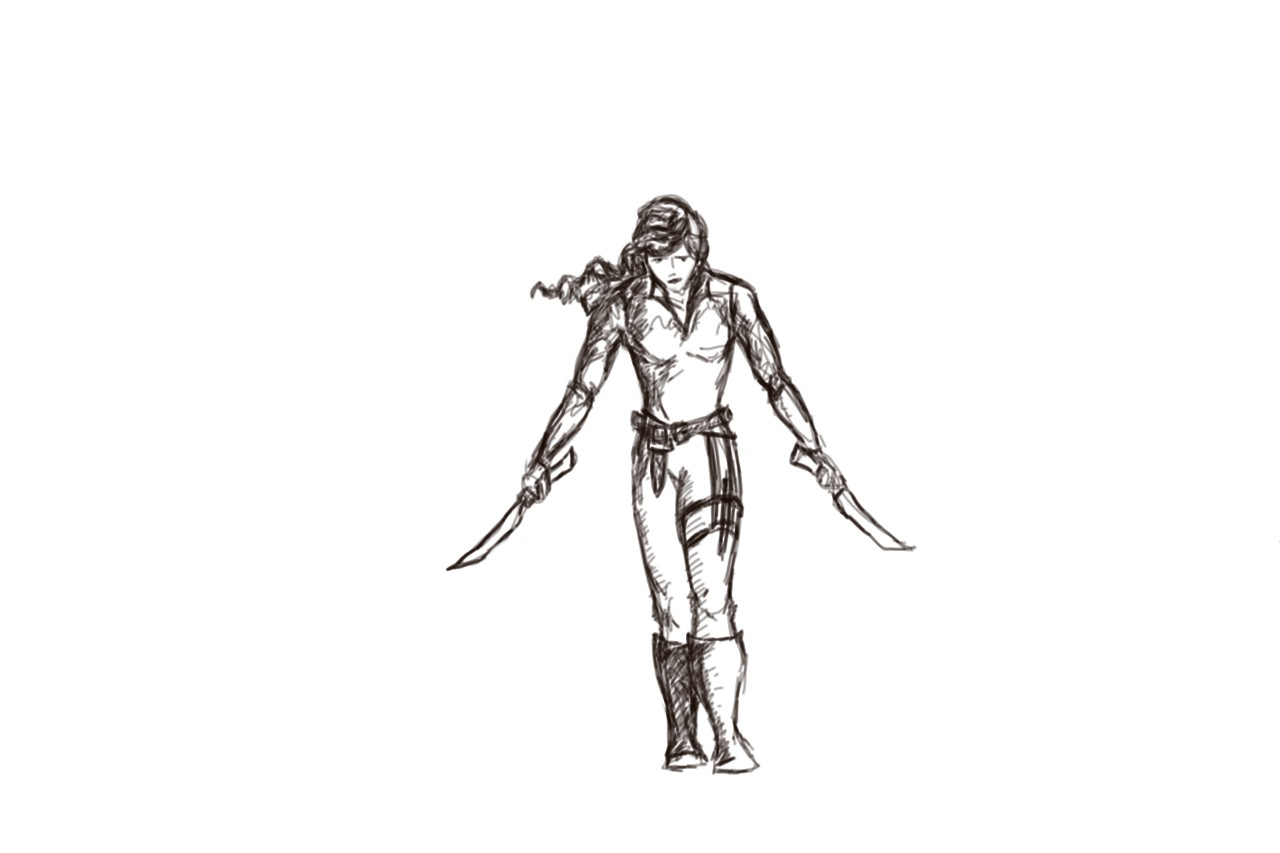
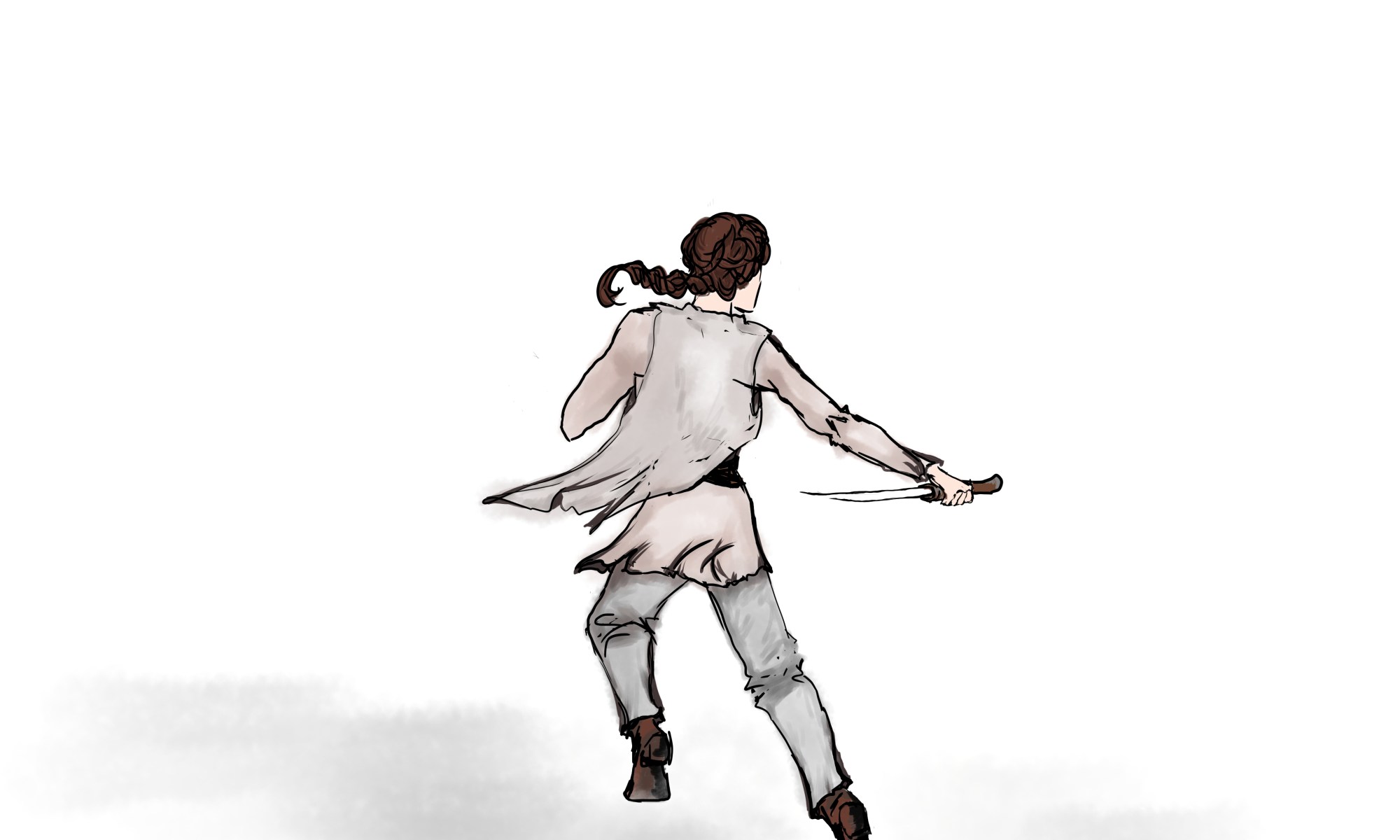
Concept art-Zare fights

I have a new drawing program that I’m learning how to use. Clip Studio Paint (aka Manga Studio 5) can do a lot and I’m over here like “Wait…how do I select that?” But I’m loving the program anyway.

Have a look at peasant-dressed Zare whipping out Shiharr and Azzad.


onezarefight

20-The Cistern


It took two tries and a great deal of straining for Jemin to wrench the grate off the wall. He burst back to the surface gasping for breath. I waited to make sure he was alright. He puffed for a minute and then settled into treading water. “Be careful. Don’t be cocky—just see what you can and get out. It does us no good if they catch you, too. I will gather what I can about sentry movements and I will meet you in that alley over there.” He gestured back toward the alley we’d come down to get here.

I nodded. Thrills of excitement and fear coursed through me as I filled my lungs with air and dove down to the ravaged grate.

Jemin hadn’t ripped the grate off entirely so I had to maneuver to slip through the awkward gap. The tunnel was very dark and I swam with one hand outstretched wishing for a glowfish to light the way. Not that there would be anything to see—there was only blackness and the hollow, muted sound of water pushing through the tunnel. I touched the wall once or twice, it was smooth from the constant caress of the Tryber. The tunnel remained lazy and straight for what seemed like an eternity. Suddenly I realized I should have started counting the moment I entered the tunnel. I could hold my breath at least an hour after the manner of the nymph kind, but I could also drown if this tunnel were somehow longer than that.  It couldn’t be, though, if it stayed straight and the Tryber had told the truth about the cisterns. I swam forward at an even pace trying not to fret.

There was a soft yellow light ahead and I noticed the water no longer filled the tunnel. Then the water became faster, louder and dirtier. The light grew stronger and more yellow until I came to another grate, more delicately made than the first, and filthy. The river water poured through this grate, and then an even finer grate after that. Beyond that I saw a screen. I had arrived at the garrison cistern. Apparently, they tried to filter the Tryber’s grubbiness away before drinking it. I regarded the grate, wondering how long the tunnel had been and if I could get Jemin down here. If I could, how much noise would we make ripping the grates off the wall?

I was not about to let a few sieves prevent me from rescuing my family. I touched the grate—I couldn’t fit my fingers through the holes on this one but I could sort of get a grip on the slimy metal squares. I rattled it cautiously. To my surprise the grate wobbled freely like it was sitting in a track. I tried pushing up and down, and the grate choked, caught, but then slid up and down. They were probably meant to be cleaned, or changed, to keep the water flowing uninhibited into the cistern.

I pushed the grate up and then slipped through underneath. I closed it behind me and tried the next one. It, too, moved on a track—though clearly not very often. I made it past this one and came to the screen at the end of the tunnel. It was smothered in river silt and the water only covered the bottom half. I surfaced and cautiously wiped some of the silt away so I could see into the cistern. Gillenwater had been a very prosperous city once, and the cistern showed that. It was a large room. The stone walls reached high and pillars stood at intervals down the center holding up the stone ceiling. In smaller holdings, a cistern was often just a giant hole. The soft light I’d seen was from a torch ensconced on a landing above the water line. The landing was lined with clay jars and crowned with stairs leading out of the cistern. Seeing no one, I pushed on the screen. It was by far the easiest to move on its track. Ducking underwater again I closed the screen behind me and swam into the cistern.

I approached the landing watchfully. All was quiet, so I drew myself out of the water. I crouched on the landing for a moment, my heart pounding as I listened for movement above. Hearing nothing, I straightened and moved forward to get a look up the stairs. Above, I could see a hallway and another lit torch. The entrance to the cistern was indoors. This information didn’t seem worth the trouble of swimming in unless I found out exactly where this cistern was in relationship to wherever they were holding my family. Resolve quieted my heart. Jemin probably wouldn’t be pleased, but as long as I didn’t get caught we’d be in a much better position.

Stepping back to the edge I squeezed the river water from my clothes as well as I could. There was a solid chance that the garrison had servant girls—and I was willing to bet the girls didn’t have uniforms. I might blend in with my ragged homespun, wet though it was. As an afterthought I picked up one of the jars and scooped water out of the cistern. I could roam the place with purpose.

Taking a deep breath, I muttered, “‘Never been important or the center of attention, ever,’” and then walked up the stairs.

At the top I followed the hallway to the left. Torches flickered at intervals but otherwise everything was quiet. Given the late hour, I didn’t expect many people to be about. Every time I reached a junction I hesitated and peered down the hallway trying to discern what was down there. Mostly living quarters, as best as I could tell. Hall upon hall of bedrooms for fighting men. Once I saw someone walking down the hall toward me—he was looking at the floor and moved tiredly. He entered one of the rooms without so much as a glance in my direction. Getting off patrol duty?

I kept going, moving as quickly as I could while carrying the jug. At the next hallway I heard men’s voices. I paused before reaching the gap and listened. They were moving away from me. I strained to hear them.

“…new girls…yet…red-headed…”

“…fine creature…”

My heart strangled. Olena…they had to be talking about Olena. How many red-headed girls could there be in this garrison? I slipped around the corner with my jug. There were two men far down the hallway, walking away from me still and nearing the end. I started after them, careful to keep my footfalls silent. They were laughing, and it sounded harsh in the quiet of the night.

At the end of the hall they stopped and one of them started fumbling with a locked door. I slowed, but kept coming, mentally chanting “Never been important or the center of attention, ever,” and willing them not to notice a lowly servant on an errand.

They laughed again at some joke I had drowned with my inner chant. I was quite close now. The door opened and one of the soldiers entered the room, the other leaned on the doorjamb, “Pick one for me, too.”

I heard a woman’s yelp, followed a chorus of wails. I had found the circus women.

19-Scouting

Hearing it said aloud left everything in me brittle and heavy. I was sure that all of my blood drained from my head and into my feet. I scolded myself: It was not as if the confirmation was a surprise. My family would very likely be taken to Hirhel within days. How long would it be before they were executed? Days? Months? Perhaps years, I supposed, depending on the Nether Queen’s mood. Jemin set his hand on my leg and squeezed while he asked another question of our knowledgeable tradesmen. I tried to listen: I focused intently on each word, but when they stopped speaking I had no idea what had been said.

Suddenly Jemin was standing up, “Thank you, sir. We’re a mighty bit tired, is there a room we could let to stay the night?”

I slipped off my stool, paying attention now.

The tavern keeper eyed us—probably thinking about the pathetic coins we’d laid out for our lunch—and then nodded. He gestured for us to follow him and then led the way down a long hallway.  All the way at the end of the hall he stopped and opened a door to a room so small that the thin mattress took up most of the floor. There was a solitary oil lamp hanging on the wall, and a narrow window at the back of the room. Jemin thanked the tavern keeper and I think they exchanged words about the price but I was too busy scanning the room for rats to know for sure.

The tavern keeper left us and Jemin shooed me into the room and closed the door. I watched as he gave the room a quick once over—checking the walls for peep holes and the like. Strange homesickness welled inside: Exile made even intrigue a reminder of home. I grimaced.

“Are you alright?” Jemin asked once he finished checking the room.

I nodded, “Hearing about their capture as a juicy morsel of interesting gossip just caught me by surprise.” The bitter edge in my voice startled me.

He looked at me closely.

Changing the topic, I dipped my chin toward the walls, “Can you even put your arms out?”

Jemin smirked and spread his arms—sure enough, he could touch both sides of the room. “Being poor and simple makes us appear powerless–nonthreatening. Besides,” he added with a shrug, “it’s not as if we travel with the wealth of Dalyn in our pocket.”

“Is there yet wealth in Dalyn?” I asked, surprised.

“Not especially, no.”

I gestured to the bed. “We’re staying the night?”

“Yes,” replied Jemin. “But probably not here. The cobbler says they are closing the gates at night now, and I want to get a look at the garrison to see what I can learn about it”

“We can’t do that in daylight?”

“We can, and we will. But if I want a closer look I need darkness. I doubt we will spend much time in this room, my lady. And if we do, the bed, such as it is, is yours.”

I wasn’t sure I wanted the bed—uncertain as I was about its prior tenants—but I appreciated Jemin’s deference.

“Ready to go?” he asked.

I nodded, and wasn’t really surprised when he opened the window. He slipped his hulking frame through the narrow window with care and precision. I climbed out after him lightly. He closed the window most of the way behind us and then we set out. Gillenwater was not a small city, and our tavern was located just west of the center.

We wound our way northwards and uphill through the city until we reached the castle and its garrison at the highest and furthest point. A ten foot wall wrapped around both, ending at the northernmost city walls. The houses in that part of the city were bigger, and most had walled gardens. There were not many people about, and I felt conspicuous as we casually worked our way around the wall using side streets and alleys for cover. The wall was built from smooth cut stone—probably from quarries of a vassal in the Magron Mountains. There wasn’t much in the way of hand holds, but it was short enough to boost someone over if we needed to.

We stopped when we reached the Tryber. The river flowed right next to the garrison, and while Jemin gazed at the wall, I crouched on the steep stone banks and reached for the water. My fingers just brushed the river, but it was enough to exchanged pleasantries. It remembered me. Lazy and tinged with filth, the Tryber was still the life of the city. It passed under the city walls at the northwest and the southeast, and waterways had been cut in a few places to bring water to other parts of the city. Including the castle.

“What are you doing?” Jemin’s voice made me jump and yank back my hand.

I stood up and wiped my hand on my tunic. “Checking the river,” I said slowly. “There is a water way that leads into the garrison and castle grounds.”

Jemin gave me a curious look, then stepped to the edge and looked out at the wall, “I don’t see any sign of this water way.”

“It must be under the surface,” I replied, leaning out to look for myself. “The Tryber said it was there.”

Jemin looked at me sharply. “The Tryber tol…” he paused, “You’re a nymph!”

“Half,” I corrected. “It isn’t common knowledge, either.”

Jemin shook his head, “Well, that changes the game a bit. I’ve never met a half-nymph before, though I did see the ambassador from Daiesen once—from a distance. Is it true that you can hold your breath for an entire day? Or does that not come with half-blood?”

I grimaced, “It’s not exactly true. And anyway, I should think this tunnel is barred—we barred ours. Nymphs aren’t exactly rare in these parts.”

Jemin clearly wanted to ask more questions, but had better sense than to do so here in the street. “We shall have to come back tonight to investigate,” he concluded. Having done all we could in daylight, he led the long walk back to the tavern. We climbed back through the window into our closet of a room. He took a seat on the floor by the door, blocking the entrance. His legs didn’t have space to stretch out all the way. “We should get some sleep,” he said. “Eloi knows we won’t get much tonight.”

I settled gingerly on the mattress. When nothing scuttled away my misgivings were outweighed by weariness. In the dulled light of our closet, I was asleep within minutes.

The room was completely dark when I woke up. The sun had set, and no one had lit the lamp. I heard movement by the window and saw Jemin’s silhouette “Lady Zare?”  he whispered.

“I’m up,” I croaked, pushing myself to my feet and trying to shake the thick sleep from my head.

“I’m sorry to wake you, my lady,” Jemin offered me some way-bread, “But I didn’t think you would like to be left behind.”

I accepted the food gratefully. “You’re right, and thank you.”

“It is past curfew now—and nearing midnight,” Jemin explained while we ate, “we must be extremely careful crossing the city. Stick to shadows, avoid patrols. If we are seen, our best hope is to play drunken fools—if that fails we pray we win the fight quickly and can flee.”

I smirked, wondering how often the drunken stumble had been used by these soldier spies.

“Can you fight, my lady?” asked Jemin. The faint light from the window glinted off the hilt of the small knife he was offering to me.

“I can,” I replied, accepting the knife and trying to find a place to hide it on my person. My shoes weren’t tall enough, so I ended up tying it to the belt for Shiharr and Azzad, but in front, and tucked inside my trousers.

We finished our food quickly and left the tavern. The hike to the castle felt even longer than it had earlier as we darted from shadow to shadow listening for patrols. We heard no fewer than five as we crossed the city. We were always able to get down an alley and behind cover before they passed. At last we reached the place the garrison wall met the Tryber.

I slipped out of my vest and handed it to Jemin. “I’ll go.”

“Just see if the tunnel is barred, and how big it is,” said Jemin.

I nodded and sat on the stone bank to slip myself into the cold water. I drew a deep breath, let the murky water close over my head and started to swim upriver along the wall. I was cautious. Waters and nymphs were friends by default, but waters also sometimes had opinions about the lands and peoples that surrounded them. It wouldn’t do for me to offend the Tryber with my intentions. Yet the river seemed untroubled by me and led me quickly to the big grate which marked the large waterway into the garrison. It was roughly centered from the edge of the garrison wall to the edge of the city. I hooked my fingers through the grate. The bars weren’t thick, but the grate was relatively fine—designed to keep out fish and junk, in addition to ambitious nymphs. It was a long water way—I suspected it went all the way to the castle. Stretching out my fingers I felt the currents and asked the Tryber to tell me more. There was a cistern in the heart of the garrison, and another in the castle. The Tryber didn’t mention air in the tunnels, but there was a good chance I would be able to get in this way, even if Jemin couldn’t. I shook the grate and it wiggled. I wondered if Jemin would be strong enough to tear it off.

Turning, I swam back to Jemin. He was crouched in the shadows, waiting anxiously. I puffed out the stale air in my lungs and drew a deep breath of the fresh night.

“What did you find?” asked Jemin.

“It’s a long tunnel, goes to a cistern in the heart of the garrison—and another in the castle. I think it is five feet across, give or take. There is a grate across the opening, but if you can get it off—or mostly off—I think I could get into the garrison.”

Jemin considered this a moment, and then swung his legs over the bank. “Let’s find out.”

18-Gillenwater

*

Jemin used our long walk to smear dirt on my face, muss my hair, and teach me to droop my shoulders and shuffle my feet. “Today you are not a princess, and you are not a performer. You are poor, hungry, and have never been important or the center of attention, ever. You probably spend your days bent over mending or maybe cooking,” Jemin continued seriously, “The only thing notable about you is that you’re traveling—and the only one who finds that notable is you.”

I didn’t think I stood out that badly, but I listened and emulated the walk he taught me. I hunched and thrust my neck forward and tried to imagine that I was heavy laden, beaten, and starved.

“We should let people assume that we are married,” instructed Jemin, as if discussing proper saddling. “It may offer you some protection, and is the shortest explanation for why we are traveling together.”

“Very well,” I replied, willing down a blush. This was spy work, and I was not a little girl. I couldn’t afford to be.

The people we met on the road closer in to the city didn’t even look at us, almost as if we were dirt or weeds. Or worse, starving dogs that might beg if they caught our eyes. Even at the city gates, with soldiers scrutinizing all who came and went, we were barely seen. I had thought our pilgrim gaggle was inconspicuous, but I had not known what inconspicuous was.

I tried to take in the city with an expression of shy wonder pasted on my face—as I imagined a country girl might—even though Gillenwater was not a happy sight. The harvest festival was completely ended and the carnival mood had been stripped from the city. The sun shone, but it felt terribly gray and cold inside the city walls. We crossed the little bridge over the Tryber and paused to watch workmen pick through the smoldering remains of the Queen’s forges.

“That should slow her down a touch,” muttered Jemin, before turning away. He guided us toward the market square, where we found the public well and drew water for Line and for ourselves. The glass tree was gone, though the lonely sheaves of wheat still stood here and there around the square. They looked dirty and wilted in the daylight, and without smiling people or music to make them bright.

People went about their business quickly and with their heads down. Even the normal city sounds were muted and strained.

Jemin asked someone where he could find a tavern, and we were directed a block away to a building with a covered porch and long shed row stable down the side. There were a handful of horses tethered to the hitching post out front, and Jemin added Line to the number.

I scratched the donkey behind the ears and whispered, “We can’t attract attention, Line, please be good.” He flicked his ears amiably and I followed Jemin into the dim light of the tavern.

It was midday, and the tavern had a respectable—if small—crowd of people huddled in clusters over bowls of what smelled like lamb stew. There was muted conversation all around the room, and no one really cared when we entered. I found this remarkable as I followed Jemin to the counter and tried to remember if I had ever walked into a tavern without being noticed before. Not that I’d been in a terrific number of taverns—just since the circus, really, and usually with a boisterous group of acrobats.

The middle aged man behind the counter greeted Jemin. “What can I do for you?”

“Some supper, please,” said Jemin, so meekly that I nearly didn’t recognize him. He laid a few coins on the countertop.

The tavern keeper looked at the meager coins then scooped them into his hand. “We can do with that,” he turned and scurried off through a doorway behind the counter.

While we waited, we both looked around. The few people sitting at the counter took mild notice of us. They looked like tradesmen and shopkeepers. A cobbler, I thought, and the one next to him made something out of wood—there was a fine layer of sawdust in his hair and his hands were strong and calloused. Further down, I guessed a blacksmith and probably a couple men and a woman who mostly sold things rather than made them. Our soup arrived in half-full bowls. It was not going to be a generous meal, but it was a change from the meager way fare I’d been eating.

As we ate, Jemin turned to the cobbler. “Excuse me, we’re travelers,” he said, stating the obvious, “And we saw a burned out building as we entered the city, what happened?”

The cobbler swallowed slowly and glanced at the corner before answering. We followed his look to the corner and saw a small table of soldiers, clearly off duty and immersed in their food. “That was the Queen’s forges, someone attacked it day before last.”

Jemin made a shocked face at the explanation, reminding me to look equally stunned. “Who?” asked Jemin, his voice low but carrying a touch of excitement.

The cobbler shrugged. “No one knows. You picked a bad time to be traveling through Gillenwater, I’m afraid. They are searching everywhere to find out who would dare such a thing.”

“It’s caused a powerful lot of trouble here,” put in the wood carver darkly, “We have a curfew now. And any man who is young and fit walks the streets at his own risk.”

Jemin started to act a touch nervous, “What happens to them?”

“Stopped, questioned, sometimes arrested and beaten,” replied the wood carver.

“They have no idea who they are looking for,” added the cobbler, scorn creeping into his voice, “That much is certain.” He looked for a moment as if he were going to say something else but the wood carver jabbed him with his elbow and he held his peace.

“We saw a column of cavalry on the road the other morning, was that because of this?” asked Jemin. He played innocent quite well, I thought.

The tradesmen nodded, and the cobbler replied, “They came back in a rush and bother with prisoners yesterday, so we thought they’d found the fire makers.”

“But the hunt continues,” said the wood carver.

“How odd!” Jemin exclaimed. “Who do you suppose they caught that they’d come back if it wasn’t who they were looking for?”

“Women,” the wood carver grunted in disgust and my stomach turned over.

Jemin glanced at me, “They carry off women?”

The cobbler leaned in, enjoying his possession of insight. “Women, yes. Occasionally. But rumor has it,” he cast a careful eye at the soldiers in the corner, “That they found someone really important—someone of royal blood from one of the other conquered cities—from Galhara.”

17-The Other Side of the Matter

*

In spite of the burning energy that coursed through me at the prospect of our spy mission, I was asleep as soon as I laid my head down. The turmoil and sleeplessness of the past few days left me senseless until the gray of dawn filled the glen. In the morning, the numbers in the glen were much reduced, and I learned over breakfast that Quill had sent most of the party out to scout the land and keep watch.

My breakfast was also filled with Namal’s litany of reminders about blending in and not taking chances. He seemed to forget that Nadine and I both had fought by his side when the siege of Galhara had become dire. Besides that, I’d been a fugitive exactly as long as he had. I was hardly a naïve child any longer. However, I was glad he had agreed to let me go, so I let him talk.

Once I was done eating I went to the stream to freshen up. The morning sun made the water look like spun gold. The stream lazed through a wide pool over yellow sandstone pebbles, giggling softly to itself at its morning finery. It reminded me of the gold inlays of my father’s throne room walls—before they melted off in the inferno. I shed my shoes and rolled up my homespun trousers before wading into the cold of the stream. Its source was definitely high in the Magron Mountains, and it welcomed me gladly. I hadn’t realized how much I had missed living water. Weariness fled the touch of the icy water as I splashed it on my face and arms, trying to get a little clean without soaking my clothes. Not that pilgrims tended to be very clean. I stopped splashing and lingered ruefully in the running water.

“Zare…”

I turned and saw Balleck standing awkwardly a few feet away. The generous sun piled gold on his head, too, tinged with red. I stepped out of the stream, shaking water off and inwardly mourning that I had to leave its friendly touch. “Yes?”

“The donkey is loaded up, and they are waiting for you,” he said, shifting.

I stared at him, not sure why he looked like a child caught with sweetbread. It wasn’t as if wading in a stream was a scandalous thing to find a girl doing. “Is something wrong?” I asked.

“I’m sorry, I don’t know what to call you.” Balleck bowed slightly at the waist, looking very uncomfortable and silly.

“Oh—Lady Zare, perhaps,” I offered. It seemed too presumptive to reclaim “Princess”—as if we’d already won our little rebellion. “Though, obviously not if we’re in disguise somewhere.” I sat down to put on my shoes. “Why are you so nervous?”

Balleck hesitated, then crouched next to me as I rolled down my trousers. “I don’t know…one minute you’re a stunt rider, the next you’re a princess, and twenty fighting men are deferring to you and jumping to their feet when you move.” He smiled, “I’m a circus rat. Born to it. If Lord So-and-so’s son, who’s made it into an important branch of the army stands and bows when you enter, shouldn’t I?”

I rolled my lips together. In a less complicated world, the answer would be yes. But I wanted to say no. So I avoided the question. Until now I hadn’t really thought about the other part of regaining our royal life—the part that meant losing this one. “I was never just a stunt rider—I thought it was obvious we were refugees of some title.”

“Sure,” replied Balleck, “But refugees of some title is not the same as the exiled royal family of Galhara. Rumor said the royal castle burned with supernatural fire taking the royal family with it.”

A joyless smile twisted my lips. “Well, that rumor is mostly true. And serves us well enough.” I had finished with my shoes, but didn’t get up.

“They say,” continued Balleck, “that the Nether Queen herself rode out to Galhara when she decided the siege was taking too long. They say that she lifted her hands and called fire from heaven and it fell upon the castle. That the fire burned for days and was high and hot—as if the entire castle were in the same fire that consumes the Fallen in hell.”

I looked at my shoes. “We saw her standard.”

Fire had rained from above—flaming wreckage from catapults—and it had burned for days. The catapults hit a storehouse that contained a gift from the nymphs of Daiesen; the secret to fire that burns on water was set aflame. An unlucky shot. The barrage of fire from the catapults continued until the burning could not be stopped. We could not breathe, we could not fight.

Some of our people were able to flee down the cliffs. We, and those closest to us, were too deep inside the castle to escape by going out. We had to go deeper into the heart of the citadel to the little underground river that fed our fortress, and burst in a waterfall from the cliffs to the bay below. Those of us who could hold our breath like the dolphins of Daisen helped those who could not. Five people to save fifty. It was a wonder any of us survived. We had huddled at the foot of the cliffs, expecting at any moment to die in a hail of arrows, but none came. The plume of smoke from Galhara blackened the sky and covered our flight—we concluded that they did not know about our river, or about our half-blood. Once word reached the nymphs they came and spirited us away to the bottom of Daisen Bay and the halls of my grandfather.

To Balleck all I said was, “There were siege engines, nothing more.” After a pause I added, “I will teach you courtly manners if you teach me more fire spinning.”

Balleck smirked. “Maybe I’ll just teach you fire spinning and leave the spoons and forks where they may.”  He stood up and offered me his hand.

I accepted Balleck’s hand up and we walked to where the others were waiting with Jemin and Line, the donkey. Jemin was dressed differently than he had been yesterday. Today he was in un-dyed homespun and a worn out leather jerkin that barely fit over his burly frame. His belt was tattered and his shoes flapped a bit at the soles. Even the military bearing was gone. If I hadn’t seen him yesterday I would’ve guessed he was a blacksmith, out of work, like as not. Line was loaded with a modest bag or two—presumably food and clothes for the look of the thing.

Namal gave me a quick embrace, “Please be careful, Zare.”

“I’m always careful,” I replied, and gave Ayglos a kiss on the cheek before moving to Jemin’s side.

“I will take care of her, your highnesses,” Jemin bowed.

We moved off, our walking pace draining any drama or excitement from the moment. Down the gulley, through the woods, back to the road, back to Gillenwater.

**

December, December

The holidays are upon us–with glitter, bows, lights and music. Having no wish to compete with the season, and desiring to get a good grip on the next section of the story, Zare will take a short break for the month of December.

I may continue to post art, but the story will be going on hold until January 4th.

Don’t despair–and don’t wander too far away!