Fire Horse

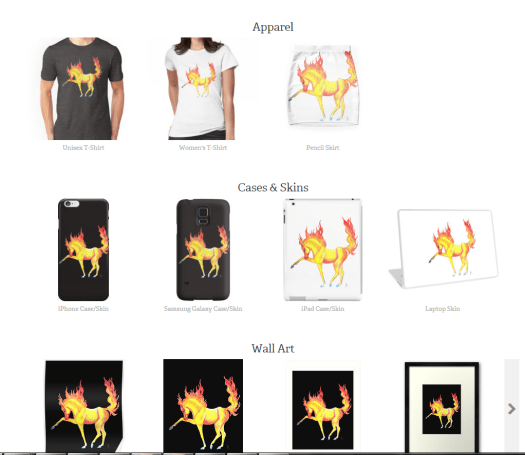
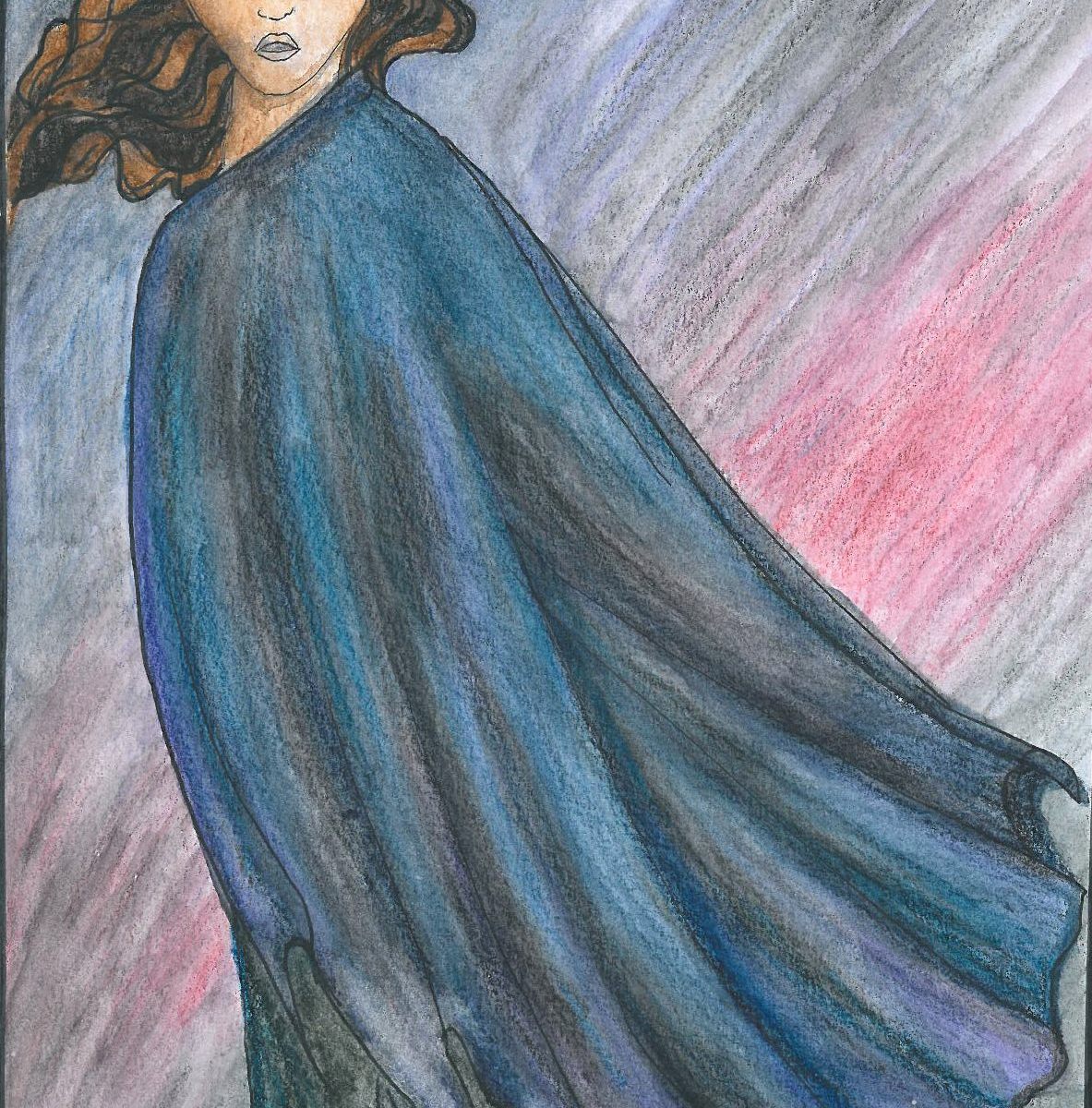
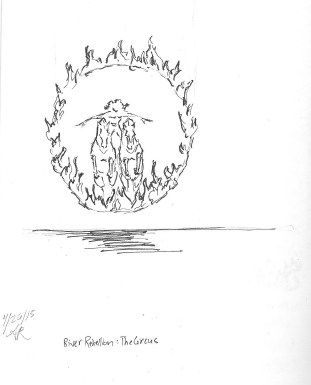
I have a new design up on Redbubble. Christmas week I just had a hankering to draw a horse–my favorite kind of horse to draw, the Arabian.

Arabians and their daughter breed, the Thoroughbred, are high energy horses–often referred to as “hot” or more poetically “fiery.”

There is a half Thoroughbred horse where I ride who I will probably always refer to as a colt–because he acts like one. Always active and getting into trouble, he has a deep desire to work, to run,  to do stuff, and be the center of attention.  He is not afraid of much, but he’ll spook at imaginary things for an excuse to gallop across his pasture. Then he’ll prance, stamping and rearing just because he can. Last week he was plucking the fence like a guitar.

Some horses are made of fire.

firehorse

Click here to shop at Redbubble.

firehorseproducts


18-Gillenwater

*

Jemin used our long walk to smear dirt on my face, muss my hair, and teach me to droop my shoulders and shuffle my feet. “Today you are not a princess, and you are not a performer. You are poor, hungry, and have never been important or the center of attention, ever. You probably spend your days bent over mending or maybe cooking,” Jemin continued seriously, “The only thing notable about you is that you’re traveling—and the only one who finds that notable is you.”

I didn’t think I stood out that badly, but I listened and emulated the walk he taught me. I hunched and thrust my neck forward and tried to imagine that I was heavy laden, beaten, and starved.

“We should let people assume that we are married,” instructed Jemin, as if discussing proper saddling. “It may offer you some protection, and is the shortest explanation for why we are traveling together.”

“Very well,” I replied, willing down a blush. This was spy work, and I was not a little girl. I couldn’t afford to be.

The people we met on the road closer in to the city didn’t even look at us, almost as if we were dirt or weeds. Or worse, starving dogs that might beg if they caught our eyes. Even at the city gates, with soldiers scrutinizing all who came and went, we were barely seen. I had thought our pilgrim gaggle was inconspicuous, but I had not known what inconspicuous was.

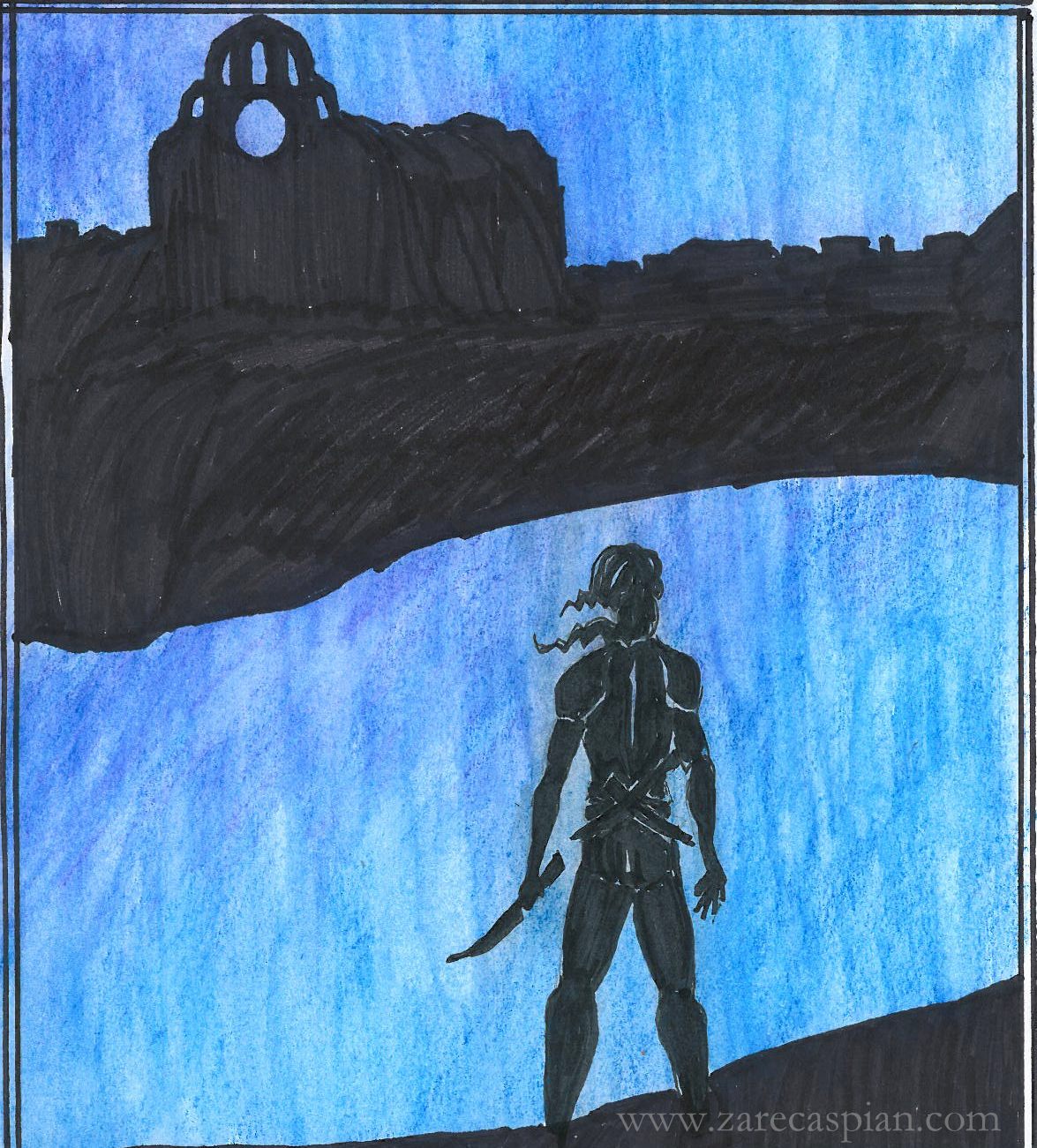
I tried to take in the city with an expression of shy wonder pasted on my face—as I imagined a country girl might—even though Gillenwater was not a happy sight. The harvest festival was completely ended and the carnival mood had been stripped from the city. The sun shone, but it felt terribly gray and cold inside the city walls. We crossed the little bridge over the Tryber and paused to watch workmen pick through the smoldering remains of the Queen’s forges.

“That should slow her down a touch,” muttered Jemin, before turning away. He guided us toward the market square, where we found the public well and drew water for Line and for ourselves. The glass tree was gone, though the lonely sheaves of wheat still stood here and there around the square. They looked dirty and wilted in the daylight, and without smiling people or music to make them bright.

People went about their business quickly and with their heads down. Even the normal city sounds were muted and strained.

Jemin asked someone where he could find a tavern, and we were directed a block away to a building with a covered porch and long shed row stable down the side. There were a handful of horses tethered to the hitching post out front, and Jemin added Line to the number.

I scratched the donkey behind the ears and whispered, “We can’t attract attention, Line, please be good.” He flicked his ears amiably and I followed Jemin into the dim light of the tavern.

It was midday, and the tavern had a respectable—if small—crowd of people huddled in clusters over bowls of what smelled like lamb stew. There was muted conversation all around the room, and no one really cared when we entered. I found this remarkable as I followed Jemin to the counter and tried to remember if I had ever walked into a tavern without being noticed before. Not that I’d been in a terrific number of taverns—just since the circus, really, and usually with a boisterous group of acrobats.

The middle aged man behind the counter greeted Jemin. “What can I do for you?”

“Some supper, please,” said Jemin, so meekly that I nearly didn’t recognize him. He laid a few coins on the countertop.

The tavern keeper looked at the meager coins then scooped them into his hand. “We can do with that,” he turned and scurried off through a doorway behind the counter.

While we waited, we both looked around. The few people sitting at the counter took mild notice of us. They looked like tradesmen and shopkeepers. A cobbler, I thought, and the one next to him made something out of wood—there was a fine layer of sawdust in his hair and his hands were strong and calloused. Further down, I guessed a blacksmith and probably a couple men and a woman who mostly sold things rather than made them. Our soup arrived in half-full bowls. It was not going to be a generous meal, but it was a change from the meager way fare I’d been eating.

As we ate, Jemin turned to the cobbler. “Excuse me, we’re travelers,” he said, stating the obvious, “And we saw a burned out building as we entered the city, what happened?”

The cobbler swallowed slowly and glanced at the corner before answering. We followed his look to the corner and saw a small table of soldiers, clearly off duty and immersed in their food. “That was the Queen’s forges, someone attacked it day before last.”

Jemin made a shocked face at the explanation, reminding me to look equally stunned. “Who?” asked Jemin, his voice low but carrying a touch of excitement.

The cobbler shrugged. “No one knows. You picked a bad time to be traveling through Gillenwater, I’m afraid. They are searching everywhere to find out who would dare such a thing.”

“It’s caused a powerful lot of trouble here,” put in the wood carver darkly, “We have a curfew now. And any man who is young and fit walks the streets at his own risk.”

Jemin started to act a touch nervous, “What happens to them?”

“Stopped, questioned, sometimes arrested and beaten,” replied the wood carver.

“They have no idea who they are looking for,” added the cobbler, scorn creeping into his voice, “That much is certain.” He looked for a moment as if he were going to say something else but the wood carver jabbed him with his elbow and he held his peace.

“We saw a column of cavalry on the road the other morning, was that because of this?” asked Jemin. He played innocent quite well, I thought.

The tradesmen nodded, and the cobbler replied, “They came back in a rush and bother with prisoners yesterday, so we thought they’d found the fire makers.”

“But the hunt continues,” said the wood carver.

“How odd!” Jemin exclaimed. “Who do you suppose they caught that they’d come back if it wasn’t who they were looking for?”

“Women,” the wood carver grunted in disgust and my stomach turned over.

Jemin glanced at me, “They carry off women?”

The cobbler leaned in, enjoying his possession of insight. “Women, yes. Occasionally. But rumor has it,” he cast a careful eye at the soldiers in the corner, “That they found someone really important—someone of royal blood from one of the other conquered cities—from Galhara.”

17-The Other Side of the Matter

*

In spite of the burning energy that coursed through me at the prospect of our spy mission, I was asleep as soon as I laid my head down. The turmoil and sleeplessness of the past few days left me senseless until the gray of dawn filled the glen. In the morning, the numbers in the glen were much reduced, and I learned over breakfast that Quill had sent most of the party out to scout the land and keep watch.

My breakfast was also filled with Namal’s litany of reminders about blending in and not taking chances. He seemed to forget that Nadine and I both had fought by his side when the siege of Galhara had become dire. Besides that, I’d been a fugitive exactly as long as he had. I was hardly a naïve child any longer. However, I was glad he had agreed to let me go, so I let him talk.

Once I was done eating I went to the stream to freshen up. The morning sun made the water look like spun gold. The stream lazed through a wide pool over yellow sandstone pebbles, giggling softly to itself at its morning finery. It reminded me of the gold inlays of my father’s throne room walls—before they melted off in the inferno. I shed my shoes and rolled up my homespun trousers before wading into the cold of the stream. Its source was definitely high in the Magron Mountains, and it welcomed me gladly. I hadn’t realized how much I had missed living water. Weariness fled the touch of the icy water as I splashed it on my face and arms, trying to get a little clean without soaking my clothes. Not that pilgrims tended to be very clean. I stopped splashing and lingered ruefully in the running water.

“Zare…”

I turned and saw Balleck standing awkwardly a few feet away. The generous sun piled gold on his head, too, tinged with red. I stepped out of the stream, shaking water off and inwardly mourning that I had to leave its friendly touch. “Yes?”

“The donkey is loaded up, and they are waiting for you,” he said, shifting.

I stared at him, not sure why he looked like a child caught with sweetbread. It wasn’t as if wading in a stream was a scandalous thing to find a girl doing. “Is something wrong?” I asked.

“I’m sorry, I don’t know what to call you.” Balleck bowed slightly at the waist, looking very uncomfortable and silly.

“Oh—Lady Zare, perhaps,” I offered. It seemed too presumptive to reclaim “Princess”—as if we’d already won our little rebellion. “Though, obviously not if we’re in disguise somewhere.” I sat down to put on my shoes. “Why are you so nervous?”

Balleck hesitated, then crouched next to me as I rolled down my trousers. “I don’t know…one minute you’re a stunt rider, the next you’re a princess, and twenty fighting men are deferring to you and jumping to their feet when you move.” He smiled, “I’m a circus rat. Born to it. If Lord So-and-so’s son, who’s made it into an important branch of the army stands and bows when you enter, shouldn’t I?”

I rolled my lips together. In a less complicated world, the answer would be yes. But I wanted to say no. So I avoided the question. Until now I hadn’t really thought about the other part of regaining our royal life—the part that meant losing this one. “I was never just a stunt rider—I thought it was obvious we were refugees of some title.”

“Sure,” replied Balleck, “But refugees of some title is not the same as the exiled royal family of Galhara. Rumor said the royal castle burned with supernatural fire taking the royal family with it.”

A joyless smile twisted my lips. “Well, that rumor is mostly true. And serves us well enough.” I had finished with my shoes, but didn’t get up.

“They say,” continued Balleck, “that the Nether Queen herself rode out to Galhara when she decided the siege was taking too long. They say that she lifted her hands and called fire from heaven and it fell upon the castle. That the fire burned for days and was high and hot—as if the entire castle were in the same fire that consumes the Fallen in hell.”

I looked at my shoes. “We saw her standard.”

Fire had rained from above—flaming wreckage from catapults—and it had burned for days. The catapults hit a storehouse that contained a gift from the nymphs of Daiesen; the secret to fire that burns on water was set aflame. An unlucky shot. The barrage of fire from the catapults continued until the burning could not be stopped. We could not breathe, we could not fight.

Some of our people were able to flee down the cliffs. We, and those closest to us, were too deep inside the castle to escape by going out. We had to go deeper into the heart of the citadel to the little underground river that fed our fortress, and burst in a waterfall from the cliffs to the bay below. Those of us who could hold our breath like the dolphins of Daisen helped those who could not. Five people to save fifty. It was a wonder any of us survived. We had huddled at the foot of the cliffs, expecting at any moment to die in a hail of arrows, but none came. The plume of smoke from Galhara blackened the sky and covered our flight—we concluded that they did not know about our river, or about our half-blood. Once word reached the nymphs they came and spirited us away to the bottom of Daisen Bay and the halls of my grandfather.

To Balleck all I said was, “There were siege engines, nothing more.” After a pause I added, “I will teach you courtly manners if you teach me more fire spinning.”

Balleck smirked. “Maybe I’ll just teach you fire spinning and leave the spoons and forks where they may.”  He stood up and offered me his hand.

I accepted Balleck’s hand up and we walked to where the others were waiting with Jemin and Line, the donkey. Jemin was dressed differently than he had been yesterday. Today he was in un-dyed homespun and a worn out leather jerkin that barely fit over his burly frame. His belt was tattered and his shoes flapped a bit at the soles. Even the military bearing was gone. If I hadn’t seen him yesterday I would’ve guessed he was a blacksmith, out of work, like as not. Line was loaded with a modest bag or two—presumably food and clothes for the look of the thing.

Namal gave me a quick embrace, “Please be careful, Zare.”

“I’m always careful,” I replied, and gave Ayglos a kiss on the cheek before moving to Jemin’s side.

“I will take care of her, your highnesses,” Jemin bowed.

We moved off, our walking pace draining any drama or excitement from the moment. Down the gulley, through the woods, back to the road, back to Gillenwater.

**

16-A Plan

*

“I am very sorry for the loss of your city,” said Quill through gritted teeth, bringing me back to the present as I peeled the last layer bandage away from his leg. The wound was still an angry red hole, but I thought it looked a bit better. The riding had been significantly kinder to it than the walking.

Vaudrin returned with a waxed canvas bucket filled with water and I set to gently washing the calf.

“Do you need anything else, milady?” Vaudrin asked.

“No, thank you, you may sit.”

Vaudrin hesitated, then sank to his bedroll next to Quill’s.

“If I may ask, Quill, how old are you?” I dabbed the ragged flesh carefully.

“Torturer,” hissed Quill. “Probe my wounds and ask questions, but I will not relent.”

I wrinkled my nose, unsure of the laugh that was trying to strangle out. “You had better relent, else I’ll rinse your wounds with vinegar.”

Quill wriggled uncomfortably but said nothing.

I moved on to smearing salve and changed tactic, “How did someone as young as you become captain?”

“The royal guard was gutted the day Dalyn fell. There were fewer ranks to climb.”

Vaudrin cut in, “He is being modest, your highness.” I glanced at the blond man, who continued, “We all joined the guard well before any boy should be allowed—but the captain has always excelled, they delayed his promotion until he was at least knocking on twenty’s door.”

I finished re-bandaging his leg and moved up to his shoulder.

Quill gave me a pained look when I started plucking the bandage back. I rolled my eyes at him. “And you’re the one who needs rescuing on your first big mission?” I asked as I finished peeling off the bandages and began inspecting the slash. This one was well on its way to healing.

“It’s hardly our first big mission,” replied Quill.

“Where do you think he excelled, your highness?” Vaudrin smiled.

Pursing my lips, I focused on cleaning the sword wound. “You can’t have been more than fifteen or sixteen years old when Dalyn fell!”

“I was fourteen.”

I paused, my fingers poised at his shoulder. Younger than even I was when Galhara fell. Suddenly his story became vivid—like adding salt to stew. I had been sixteen—but born with my rank and taught to fight as a matter of royal schooling. Royal schooling that became entirely practical far before expected or complete. Quill had been even younger when he was pushed into war, and I wondered if he had possessed any of my advantages. I stared at him, “Did you…join right away?” I was afraid to ask the real question: Did his family die, too?

He was looking at the ground, “I did.”

“I’m sorry,” I managed.

Quill met my eyes for a raw moment—and then inclined his head. “What’s lost is lost.”

Our conversation was interrupted by a shattering crack that brought the entire glen to its feet. There was a moment’s confusion as hastily armed men scattered like chaff to cover the area. I started to get up but Quill laid a firm hand on my arm. “Stay, your highness.”

For a split second I was surprised, then I remembered. My brothers were likewise guarded by members of the unit who stood over them like she-bears over cubs. An entire company of Remkos.

A moment later the soldiers returned. Vaudrin came to report, he paused between Quill and Namal uncertainly, then directed his findings at both of them, “We are safe. The draft horse broke the tree branch to which he was tethered. Ripped it right off the tree.”

I shifted as I felt my brothers’ eyes resting on me. Apparently Sinker’s flaw was tying. “Not to worry,” I assured the company quickly—though Quill’s men didn’t know I was responsible for the dysfunctional horses, “he won’t leave—his mind cannot cope with being tied.”

I caught Ayglos hiding a smirk behind his hand.

The soldiers returned to their beds like a flock of sparrows descending on a tree for the night. I turned my attention back to smearing salve on Quill’s shoulder.

Shortly, Ayglos and Namal came to join us; Vaudrin stood and offered them his bedroll to sit on. Once they were settled, Namal said, “Captain, we need to move quickly. I propose that we send some of the men back to Gillenwater to find out what was done with the circus women and our family. If they have sent a raven to Hirhel we have three days, perhaps less, to rescue our people.”

“Agreed, your highness,” said Quill. “Our orders were to return to Dalyn once we accomplished our mission. We will tarry here to aid you, and then will make with all speed back to Dalyn. I hope that you will still make that journey with us.

“I would send Jemin, and with your leave, your sister in disguise. A man and a woman together would be less suspicious. They can take the donkey and behave as travelers.”

Namal considered this. I could see that neither of my brothers were pleased with the idea, but there were clear advantages. With Narya’s men hunting for the rebel soldiers who burned the forges, my chiseled swimmer brothers would surely draw unwelcome attention. Jemin, who had greeted us first when we arrived, was a strapping, bearded man, who could easily be taken for a laborer—a mason or blacksmith perhaps. Add to this that no one brings a woman on a raiding party…

“Zare?” Namal turned to me. “Would you be up for the task?”

“Of course,” I didn’t hesitate.

Namal nodded and bowed his head for a moment. He looked at Ayglos, and then agreed at last. “Very well, Jemin and Zare will go into Gillenwater in the morning.”

*

Tees for book fans

Remember this post? No, I didn’t make Zare shirts–not yet (too soon?).

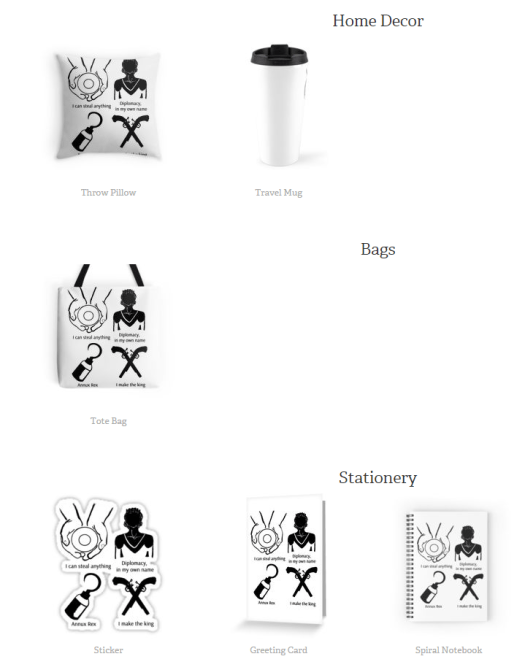
BUT…I finally made a tee shirt for the Attolia books!

This is not the first tee shirt I’ve designed–college fencing club for the win!–but it’s the first one I’ve done by myself. Wow, digital clean up is a bear. attoliateeshirtmodel

But the end result is worth it.

After a little searching around, I decided to join the Redbubble community for this project. I have no interest in dealing with production or fulfillment myself, and Redbubble handles all of that. I’ve also bought from them several times and really love their products.

Redbubble always has a Black Friday deal, you should head over there and get your one-of-a-kind fan art.

By the way…it’s not just t-shirts. Home decor, bags, iphone and android skins…even stickers.

attoliaproducts

Right now, mine is the only art for Attolia. I don’t really see that changing…but I would like to do more Attolia art so you have options. And more art in general.

I have plans and nearly-finished projects just waiting to go up!

attoliateesearch


15-In Good Company

*

We all looked at Quill in surprise. He’d said nothing at all about being the captain of his unit. How was he possibly old enough to be a captain?

“I am alive, indeed, Jemin,” replied Quill, approaching the newcomer and clasping his hand in greeting. “Report.”

“Five have wounds of one sort or another—but no one has or is likely to die from them,” replied the man. He was barrel chested, bearded, and looked older than Quill by a couple years—but at this point I wasn’t sure I was good at guessing men’s ages. Jemin continued, “When you did not come yesterday we feared the worst.”

Quill grimaced and gestured to his leg. “Caught a quarrel from one of those crossbows.” He glanced back at us, “And then took a detour. Bring us to the camp, we need rest and food and to make a new plan.”

Jemin turned and led us further down the gully until it opened out a bit and got shallow again. I could smell the stream long before we saw the quiet little pool and lazy water by which the soldiers of Dalyn had made their campsite. It was a nice spot.

The men were all standing by the time we arrived and a chorus of pleased murmurs celebrated Quill’s safe return. I got the particular feeling that the presence of five strangers significantly stymied their rejoicing. Quill hobbled to the center of the little camp. “Gentlemen,” he announced, stopping and turning to face us. “I present to you the royal princes and princess of Galhara.”

The surprised looks and soft intake of breath were gratifying. Even more gratifying was the way they snapped to attention. Royal again. My chest swelled.

Gabe and Balleck shifted uncomfortably; but Namal, the rightful crown prince of Galhara, stepped forward. “At ease,” his voice filled the little glen. “We have come for your aid.” He summed up the little raid which had shattered our new life and ended with a suitably humble request for their help rescuing our family.

Namal had directed his plea to the group at large, and I was surprised when it was Quill who answered.

“We are sworn to the protection of Dalyn. You were our allies before all was lost, and we would honor that alliance. You are welcome in our company and protection, and we will do what we can to help you regain your own.”

Captain. Of course.

Quill gestured to a big man who had a shock of curly blond hair, “Your highnesses, this is Vaudrin, my second in command.”

Vaudrin bowed. My brothers bowed in return, and I dipped in a tiny curtsy. Vaudrin was leaner built than the barrelish Jemin, and he was taller. He, like the rest standing around the glen, was on the young side of a soldier’s prime. Quill addressed Vaudrin, “Do we have any food we can share with our guests?”

“Yes, sir,” replied Vaudrin. With a gesture, he passed the order on and the glen came alive with activity. Quill’s soldiers moved like ghosts and barely spoke. Some of the men tended my prizes, others unfurled our bedrolls and began to set out food on a blanket. They built no fire—naturally—but they had a supply of olives, dates, and bread. Our own provisions were actually better, and I made sure our cheeses and slightly fresher breads made it out to the humble table.

Once all the food was set out Quill motioned for my brothers and me to take what we would first, then the rest of the men did likewise. We all carried our bread and cheese to our bedrolls. No one spoke, and the quiet sound of eating reminded me of sitting in a field with grazing animals. I didn’t know who could possibly be around to hear the soldiers in this secluded place, but they certainly weren’t taking any chances.

The long golden shadows of evening dappled the glen and danced on the face of the stream. I wanted to go touch the water and feel the comfort of its music. I didn’t. Instead I picked up Boitumelo’s satchel and went over to where Quill was sitting in close conference with Vaudrin. His leg stuck out in front of him like the beak on a heron.

Quill looked up as I approached. “Your highness.”

Vaudrin moved as if to stand but I stopped him with a lift of my hand. My, royalty was nice.

I dipped my chin toward the satchel. “Let me see to your leg, Captain.”

Quill grimaced. “It will spoil my supper.”

“I waited till you were finished—and it will spoil your life if I don’t,” I retorted.

My mysterious archer dropped his head. “Very well.” He shifted to his side to expose his wounded calf.

I knelt on the ground by his leg and began unwinding the bandage. “Vaudrin, if you wouldn’t mind sending for water from the stream?” I asked, flicking my eyes to the blond henchman.

Vaudrin nodded, “Of course, your highness.” He jumped up and moved off as softly as a breath of wind on a summer day.

“We have never had royalty among us on a mission before,” said Quill, looking away from his leg while I worked. “They don’t know which courtly manners to keep here in the wilds and which are only for civilization.”

“Then they are in good company, since we have not used courtly manners since our city burned and are not accustomed to behaving our rank.” It was only a slight exaggeration. After we fled Galhara we spent a month in the halls of my grandfather, under Daisen Bay. There, we were welcome and as royal as we had been born. My grandfather’s castle had air just like the world above, but those without nymph blood could hardly be expected to live happily under water. My mother, myself, and my siblings were the only Galhirim comfortable in my grandfather’s kingdom. So my father brought us ashore in search of a new life, and perhaps an escape. We found the circus.

*